
Antarctic
Antarctica
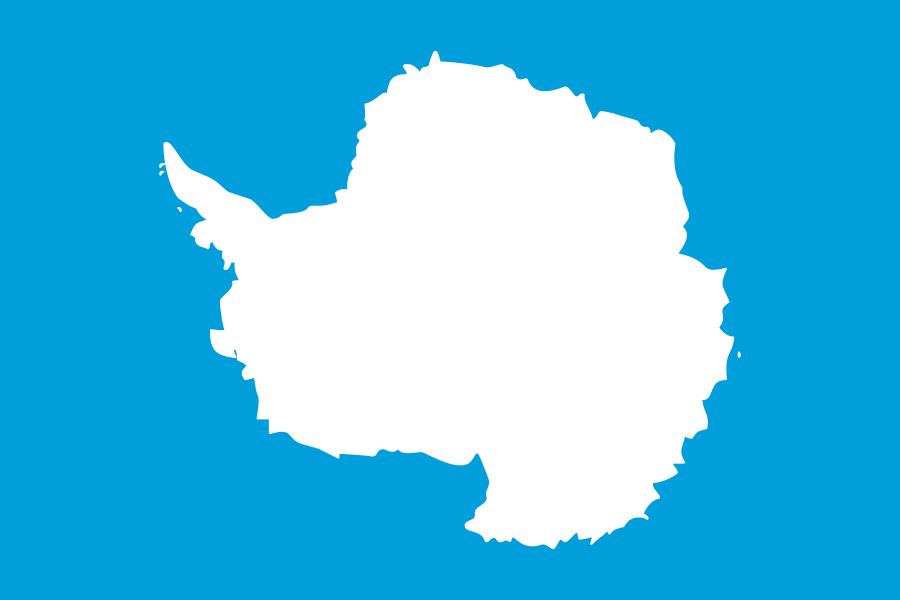
🏛️ Capital
N/A
👥 Population
1,300
📐 Area
14,000,000 km²
💱 Currency
N/A
🗣️ Languages
N/A
📞 Calling Code
N/A
🕐 Time Zones
UTC-03:00, UTC+03:00, UTC+05:00, UTC+06:00, UTC+07:00, UTC+08:00, UTC+10:00, UTC+12:00
🌐 Region
Antarctic
About Antarctica
Antarctica is the last great wilderness on Earth — a continent of superlatives that humbles every visitor who sets foot on its icy shores. The coldest, windiest, driest, and highest continent on the planet, Antarctica covers an area roughly the size of the United States and Mexico combined, yet supports no permanent human population. What it does support is an extraordinary richness of wildlife, a landscape of haunting, otherworldly beauty, and a silence so profound it can feel both terrifying and deeply healing.
Reaching Antarctica is an adventure in itself, typically involving a dramatic crossing of the Drake Passage from the southern tip of South America — a stretch of ocean notorious for powerful swells that have tested sailors for centuries. But when you emerge on the other side and see your first tabular iceberg rising from the steel-grey sea, every moment of discomfort evaporates instantly. The Antarctic Peninsula, the most accessible part of the continent, offers glacier-lined fjords, penguin colonies numbering in the hundreds of thousands, and skies that glow with extraordinary Antarctic light.
Travel to Antarctica is by expedition cruise, with small-ship operators landing passengers on zodiacs to walk among penguins, kayak past glaciers, and stand at the edge of the world's most pristine wilderness. No roads, no hotels, no crowds — just you, the ice, and an awareness that you are standing somewhere genuinely few humans have ever been. Antarctica changes people; it is an encounter with raw nature at its most magnificent and uncompromising, and those who make the journey rarely forget it.
Reaching Antarctica is an adventure in itself, typically involving a dramatic crossing of the Drake Passage from the southern tip of South America — a stretch of ocean notorious for powerful swells that have tested sailors for centuries. But when you emerge on the other side and see your first tabular iceberg rising from the steel-grey sea, every moment of discomfort evaporates instantly. The Antarctic Peninsula, the most accessible part of the continent, offers glacier-lined fjords, penguin colonies numbering in the hundreds of thousands, and skies that glow with extraordinary Antarctic light.
Travel to Antarctica is by expedition cruise, with small-ship operators landing passengers on zodiacs to walk among penguins, kayak past glaciers, and stand at the edge of the world's most pristine wilderness. No roads, no hotels, no crowds — just you, the ice, and an awareness that you are standing somewhere genuinely few humans have ever been. Antarctica changes people; it is an encounter with raw nature at its most magnificent and uncompromising, and those who make the journey rarely forget it.
History & Background
The existence of a great southern landmass was theorised by ancient Greek geographers and debated for centuries before European explorers finally began probing the frozen seas at the bottom of the world. The first confirmed sighting of the Antarctic continent is attributed to three separate expeditions in 1820 — British, American, and Russian — though credit remains contested. The Heroic Age of Antarctic Exploration that followed in the late 19th and early 20th centuries produced some of the most dramatic stories in human history, including Robert Falcon Scott and Roald Amundsen's legendary race to the South Pole in 1911-12.
Amundsen's team reached the Pole on 14 December 1911 using dogs and superior preparation; Scott's party arrived five weeks later only to perish on the return journey, leaving behind diaries that became one of history's great testaments to human endurance. Ernest Shackleton's legendary Endurance expedition of 1914–17 — in which his entire crew survived the loss of their ship trapped in pack ice and a harrowing open-boat journey — stands as perhaps the greatest survival story ever told. Today these pioneering expeditions are commemorated at preserved huts on the continent that visitors can still see.
Amundsen's team reached the Pole on 14 December 1911 using dogs and superior preparation; Scott's party arrived five weeks later only to perish on the return journey, leaving behind diaries that became one of history's great testaments to human endurance. Ernest Shackleton's legendary Endurance expedition of 1914–17 — in which his entire crew survived the loss of their ship trapped in pack ice and a harrowing open-boat journey — stands as perhaps the greatest survival story ever told. Today these pioneering expeditions are commemorated at preserved huts on the continent that visitors can still see.
Culture & People
Antarctica has no indigenous population and no permanent civilian residents, so there is no traditional culture in the conventional sense. However, the continent has developed a unique subculture centred on scientific research and international cooperation. Dozens of research stations operated by countries including the United States, Russia, Argentina, Australia, and the United Kingdom host scientists year-round, creating tight-knit communities shaped by extreme isolation, shared purpose, and the demands of working in the most hostile environment on Earth.
The international scientific community that inhabits Antarctica is governed by the Antarctic Treaty System, signed in 1959 by twelve nations and now ratified by over fifty countries. This landmark agreement dedicates the continent exclusively to peaceful purposes and scientific research, prohibiting military activity and protecting its unique environment. For visitors, interaction with this community of researchers — who study everything from climate history to astrophysics using ice cores and Antarctic skies — offers a remarkable glimpse into a truly unique human endeavour.
The international scientific community that inhabits Antarctica is governed by the Antarctic Treaty System, signed in 1959 by twelve nations and now ratified by over fifty countries. This landmark agreement dedicates the continent exclusively to peaceful purposes and scientific research, prohibiting military activity and protecting its unique environment. For visitors, interaction with this community of researchers — who study everything from climate history to astrophysics using ice cores and Antarctic skies — offers a remarkable glimpse into a truly unique human endeavour.
Food & Cuisine
Antarctica has no local cuisine as such — there are no farms, no markets, and no restaurants in the traditional sense. Onboard expedition vessels, however, you'll typically eat very well. Expedition cruise ships take food seriously, knowing that hearty, high-quality meals are a crucial morale booster on long voyages through rough seas. Expect generous buffets and restaurant-style dining featuring fresh salads, hot dishes, and plenty of comfort food designed to fuel active days ashore.
Research station personnel experience a unique food culture defined by careful planning and the challenge of resupply logistics. American McMurdo Station and British Rothera Station are famous for their communal dining halls where scientists and support staff share meals and conversation — food becomes an important social ritual in isolated, high-stress environments. Some stations even maintain greenhouses to grow fresh vegetables under grow-lights, a remarkable technological feat that provides both nutrition and psychological comfort during the long polar winter.
Research station personnel experience a unique food culture defined by careful planning and the challenge of resupply logistics. American McMurdo Station and British Rothera Station are famous for their communal dining halls where scientists and support staff share meals and conversation — food becomes an important social ritual in isolated, high-stress environments. Some stations even maintain greenhouses to grow fresh vegetables under grow-lights, a remarkable technological feat that provides both nutrition and psychological comfort during the long polar winter.
Top Attractions
- Deception Island — A volcanic caldera island where you can bathe in geothermally-heated water on a black sand beach surrounded by glaciers and penguin colonies.
- Lemaire Channel — One of Antarctica's most photographed passages, a narrow channel flanked by towering ice-clad cliffs that reflects perfectly in calm waters.
- South Pole (Amundsen-Scott Station) — The literal bottom of the world at 90°S, accessible by fly-in expeditions from Union Glacier for the most adventurous travellers.
- Peninsula Penguin Colonies — Enormous breeding colonies of Gentoo, Chinstrap, and Adélie penguins at sites like Neko Harbour and Port Lockroy, where you can walk among thousands of birds.
- Weddell Sea Icebergs — The Weddell Sea is known for its spectacular tabular icebergs, some the size of small countries, drifting in extraordinary formations.
Practical Travel Tips
- Book well in advance — Antarctic expedition cruises, especially on small ships with 100 passengers or fewer, sell out 12–18 months ahead of departure.
- Prepare for the Drake Passage crossing with sea-sickness medication; this is arguably the world's roughest stretch of open ocean and can take 48 hours to cross.
- Layer your clothing — even in summer, temperatures can drop rapidly when the wind picks up; waterproof outer layers and insulated boots are essential.
- Respect the strict environmental protocols: no food, no stones, no souvenirs may be removed; maintain at least 5 metres from penguins and seals at all times.
- Bring a good camera with plenty of memory cards — you will take more photographs here than anywhere else you have ever been.
- Consider choosing a vessel with fewer than 200 passengers to qualify for IAATO landing permits, which allow you to actually set foot on the continent.
- Travel insurance with emergency medical evacuation cover is non-negotiable for any Antarctica trip.
Visa Overview
Antarctica has no visa requirements as it is not a sovereign nation — it is governed by the Antarctic Treaty System. However, access is tightly regulated through IAATO (the International Association of Antarctica Tour Operators) and visitors must travel with licensed expedition operators. Citizens of treaty signatory nations may visit for tourism, scientific, or educational purposes. Entry requirements apply to the departure country (usually Argentina or Chile), so ensure your passport and any necessary visas for those countries are in order before departure.
Getting Around
The vast majority of tourists reach Antarctica by expedition ship, departing from Ushuaia, Argentina (the world's southernmost city) or from Punta Arenas, Chile. The Drake Passage crossing takes 48 hours each way. A small number of fly-cruise operators fly passengers over the Drake directly to King George Island, saving time but at higher cost. Within Antarctica, movement is exclusively by zodiac inflatable boat between the ship and landing sites. No roads or internal transport networks exist anywhere on the continent.
Safety Notes
Antarctica is an inherently high-risk environment requiring careful preparation. Extreme cold, unpredictable weather, and vast remoteness mean medical evacuation can take days. All reputable expedition operators carry trained medical staff and follow strict safety protocols. Follow all crew instructions regarding zodiac operations, iceberg proximity, and landing site rules without exception. The IAATO code of conduct exists to protect both visitors and the environment — adherence is mandatory on all licensed expeditions.
Other Time Zones in Antarctica
Detailed local time across various regions of the country.
Visa Requirements
Check what visa a citizen of Antarctica needs to enter any country.
Frequently Asked Questions
What is the capital of Antarctica?
The capital of Antarctica is N/A.
What currency does Antarctica use?
Antarctica uses the N/A as its official currency.
What language is spoken in Antarctica?
The official language(s) of Antarctica include N/A.
What is the population of Antarctica?
Antarctica has a population of approximately 1,300 people.
What region is Antarctica in?
Antarctica is located in Antarctic.
What is the international calling code for Antarctica?
The international dialing code for Antarctica is N/A.
What time zones does Antarctica observe?
Antarctica observes the following time zone(s): UTC-03:00, UTC+03:00, UTC+05:00, UTC+06:00, UTC+07:00, UTC+08:00, UTC+10:00, UTC+12:00.
What is the current time in Antarctica?
The local time in Antarctica is currently --:--. This time applies to the primary time zone.
What is the total area of Antarctica?
Antarctica covers a total area of 14,000,000 km².
How many states or provinces does Antarctica have?
Antarctica is divided into 7 states or provinces.
What are the public holidays in Antarctica in 2026?
You can view the complete list of public holidays for Antarctica in 2026 on the Holidays 2026 page.
What are the visa requirements for citizens of Antarctica?
Visa requirements for citizens of Antarctica vary by destination. Use our Visa Requirements Checker below to look up requirements for any destination country.