
Africa · Western Africa
Ivory Coast
Republic of Côte d'Ivoire
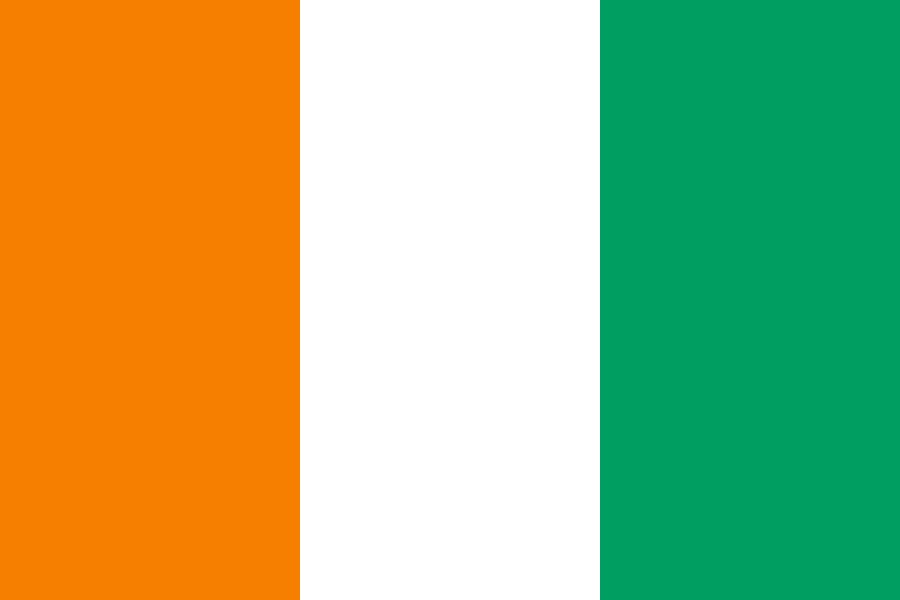
🏛️ Capital
Yamoussoukro
👥 Population
31,719,275
📐 Area
322,463 km²
💱 Currency
West African CFA franc (Fr)
🗣️ Languages
French
📞 Calling Code
+225
🕐 Time Zones
UTC
🌐 Region
Africa / Western Africa
About Ivory Coast
Ivory Coast — officially Côte d'Ivoire — is West Africa's most economically dynamic country and one of its most rewarding travel destinations, a place where the vibrant energy of its commercial capital Abidjan, the largest French-speaking city on the continent after Paris, blends with lush tropical forests, mosaic-tiled Catholic basilicas, and the exuberant cultural traditions of over 60 distinct ethnic groups. When you arrive in Abidjan, you are immediately struck by its scale and modernity — glass towers reflect the Ébrié Lagoon, five-lane highways carry streams of vehicles, and the restaurant scene rivals any francophone capital for quality and ambition.
Away from Abidjan, Ivory Coast rewards slow exploration. The Taï National Park in the southwest protects one of West Africa's last remaining patches of primary tropical rainforest, home to chimpanzees, pygmy hippos, and over 140 mammal species. The man-made Kossou Lake in the centre of the country, created by Africa's largest dam, stretches through rolling savannahs where local fishermen paddle dugout canoes in the golden afternoon light. The northern town of Korhogo is the heartland of the Senufo people, renowned throughout the art world for their bronze casting, weaving, and mask-carving traditions that have influenced European modern art since the early 20th century.
The country's political stability, restored after a difficult decade of civil conflict that ended in 2011, has brought a remarkable economic renaissance and a growing confidence that is palpable throughout the country. Locals call it La Côte, and there is a distinct swagger to the way Abidjanais carry themselves — fashionably dressed, fluent in the Nouchi street French that mixes Dioula, English, and inventive slang, and intensely proud of a country whose cocoa and coffee exports fuel much of the world's morning rituals.
Away from Abidjan, Ivory Coast rewards slow exploration. The Taï National Park in the southwest protects one of West Africa's last remaining patches of primary tropical rainforest, home to chimpanzees, pygmy hippos, and over 140 mammal species. The man-made Kossou Lake in the centre of the country, created by Africa's largest dam, stretches through rolling savannahs where local fishermen paddle dugout canoes in the golden afternoon light. The northern town of Korhogo is the heartland of the Senufo people, renowned throughout the art world for their bronze casting, weaving, and mask-carving traditions that have influenced European modern art since the early 20th century.
The country's political stability, restored after a difficult decade of civil conflict that ended in 2011, has brought a remarkable economic renaissance and a growing confidence that is palpable throughout the country. Locals call it La Côte, and there is a distinct swagger to the way Abidjanais carry themselves — fashionably dressed, fluent in the Nouchi street French that mixes Dioula, English, and inventive slang, and intensely proud of a country whose cocoa and coffee exports fuel much of the world's morning rituals.
History & Background
Before European contact, the territory of modern Ivory Coast was home to a succession of powerful trading states. The Senufo people of the north, the Kong Empire (18th century), and the Mandé-speaking traders who brought Islam along the Saharan caravan routes all shaped the pre-colonial landscape. Portuguese navigators reached the coast in the 15th century, naming it after the lucrative ivory trade — the coast's elephants were among West Africa's densest populations before the trade decimated them. French influence grew through the 19th century, and after a series of military campaigns against Chief Samori Touré (one of West Africa's greatest resistance leaders), formal colonisation was established in 1893 as part of French West Africa.
Independence came on 7 August 1960 under Félix Houphouët-Boigny, who built close ties with France and created one of Africa's most prosperous post-colonial economies through cocoa and coffee exports. His legacy includes the extraordinary Basilica of Our Lady of Peace in Yamoussoukro — officially the world's largest Christian church — an eccentric monument to his political vision. After Houphouët-Boigny's death in 1993, political tensions around citizenship and ethnicity (Ivoirité) destabilised the country, leading to a 2002 civil war that split it in two along north-south lines. The 2010–2011 post-electoral crisis ended with Alassane Ouattara assuming the presidency and international recognition, beginning a remarkable period of economic recovery and political normalization that continues today.
Independence came on 7 August 1960 under Félix Houphouët-Boigny, who built close ties with France and created one of Africa's most prosperous post-colonial economies through cocoa and coffee exports. His legacy includes the extraordinary Basilica of Our Lady of Peace in Yamoussoukro — officially the world's largest Christian church — an eccentric monument to his political vision. After Houphouët-Boigny's death in 1993, political tensions around citizenship and ethnicity (Ivoirité) destabilised the country, leading to a 2002 civil war that split it in two along north-south lines. The 2010–2011 post-electoral crisis ended with Alassane Ouattara assuming the presidency and international recognition, beginning a remarkable period of economic recovery and political normalization that continues today.
Culture & People
Ivorian culture is extraordinarily rich and diverse, shaped by the traditions of over 60 distinct ethnic groups who speak languages from four major families — Kwa, Gur, Mande, and Kru — and who maintain distinct artistic, spiritual, and social traditions. French colonialism and the subsequent influence of Félix Houphouët-Boigny, the country's founding president who ruled until 1993, layered a Francophone civic culture over these indigenous foundations, creating a society where Catholic churches stand beside mosques and traditional sacred groves, and where children study Victor Hugo in schools named after local chiefs. The result is a cultural syncretism that is creative, resilient, and intensely Ivorian.
Music is perhaps the country's most globally celebrated cultural export: coupé-décalé — a bass-heavy, brash, and joyful dance music that emerged from the Ivorian diaspora in Paris — took over West African dance floors in the early 2000s. Zouglou, an older social commentary music style born in the university campus dorms of Abidjan, remains deeply beloved at home. The Senufo, Baoulé, Bété, and other groups each maintain mask traditions, initiation ceremonies, and annual festivals that involve spectacular costumed performances, drumming, and communal feasting. Hospitality is a cultural cornerstone — guests are offered food before being asked their business, and refusing to eat is a significant social slight.
Music is perhaps the country's most globally celebrated cultural export: coupé-décalé — a bass-heavy, brash, and joyful dance music that emerged from the Ivorian diaspora in Paris — took over West African dance floors in the early 2000s. Zouglou, an older social commentary music style born in the university campus dorms of Abidjan, remains deeply beloved at home. The Senufo, Baoulé, Bété, and other groups each maintain mask traditions, initiation ceremonies, and annual festivals that involve spectacular costumed performances, drumming, and communal feasting. Hospitality is a cultural cornerstone — guests are offered food before being asked their business, and refusing to eat is a significant social slight.
Food & Cuisine
Ivorian cuisine is a celebration of West Africa's tropical abundance — cassava, plantain, yam, rice, and an extraordinary variety of leafy greens, palm oil, and freshwater fish form the foundation of a cuisine that is earthy, flavourful, and deeply satisfying. Attiéké — fermented and grated cassava, with a texture similar to couscous and a pleasantly sour flavour — is the national staple, typically served with grilled fish (brochettes de poisson) marinated in spices, sliced tomatoes, and chilli. Garba, the street-food version of this dish sold from tin-roofed roadside stalls, is Abidjan's most beloved fast food and one of the cheapest, most authentic eating experiences in the city.
Groundnut (peanut) stew, palm-nut soup, and foutou (pounded plantain or yam eaten with the fingers) are staples across the country, varying in spicing and preparation from one ethnic group to the next. Seafood along the southern coast is excellent — fresh lobster, barracuda, and snapper are grilled directly over charcoal and served with rice and pepper sauce. In Abidjan's upscale restaurants and the many French-influenced brasseries of the Plateau neighbourhood, you can eat beautifully prepared Ivorian-French fusion cuisine alongside bottles of well-selected Bordeaux. The national drink is bangui — palm wine tapped fresh from the trees and sold in plastic bags or calabash gourds, mildly alcoholic and refreshingly different from anything found outside West Africa.
Groundnut (peanut) stew, palm-nut soup, and foutou (pounded plantain or yam eaten with the fingers) are staples across the country, varying in spicing and preparation from one ethnic group to the next. Seafood along the southern coast is excellent — fresh lobster, barracuda, and snapper are grilled directly over charcoal and served with rice and pepper sauce. In Abidjan's upscale restaurants and the many French-influenced brasseries of the Plateau neighbourhood, you can eat beautifully prepared Ivorian-French fusion cuisine alongside bottles of well-selected Bordeaux. The national drink is bangui — palm wine tapped fresh from the trees and sold in plastic bags or calabash gourds, mildly alcoholic and refreshingly different from anything found outside West Africa.
Top Attractions
- Basilica of Our Lady of Peace, Yamoussoukro — The world's largest Christian church by area, a remarkable piece of papal-scale architecture rising improbably from the Ivorian bush, consecrated by Pope John Paul II in 1990.
- Taï National Park — One of West Africa's last primary rainforests and a UNESCO World Heritage Site, home to chimpanzees, pygmy hippos, and over 1,300 plant species; accessible via guided ranger treks.
- Abidjan Treichville Market — The city's most atmospheric covered market, where vendors sell everything from griot-spiced chicken to handwoven kente cloth, fetish objects, and vibrant printed Ankara fabrics.
- Korhogo and Senufo Villages — The cultural capital of northern Ivory Coast, where you can visit artisan workshops producing the distinctive Senufo mud-cloth textiles (korhogo cloth) and bronze-cast figurines.
- Grand-Bassam — A UNESCO-listed colonial town 40 km from Abidjan with faded French colonial architecture, a long Atlantic beach, and excellent seafood restaurants — an easy and rewarding day trip.
- Comoe National Park — West Africa's largest protected area, a UNESCO Biosphere Reserve covering savannahs, gallery forests, and the Comoé River, home to lions, elephants, and hippos.
Practical Travel Tips
- Abidjan's road traffic is notoriously heavy — plan any city journeys to avoid morning (7–9am) and evening (5–8pm) rush hours, when gridlock can make short distances take hours.
- Taxis in Abidjan operate as shared (woro-woro) or private — agree a fare before entering any private taxi; shared taxis follow fixed routes and are very affordable.
- The CFA franc (XOF) is the currency, shared with several West African neighbours; credit cards are accepted at major hotels and supermarkets, but cash is essential for markets and restaurants.
- French is the official language; learning a few basic French phrases significantly improves interactions outside tourist areas, where little English is spoken.
- Malaria is present throughout the country — begin anti-malarial medication as prescribed before departure and use DEET-based mosquito repellent and bed nets consistently.
- Yellow fever vaccination is mandatory for entry — carry your International Certificate of Vaccination at all times as it may be checked at borders and some hotels.
- Photography requires sensitivity — always ask permission before photographing people, markets, and religious ceremonies; some northern communities prohibit photography of sacred objects.
Visa Overview
Most visitors to Ivory Coast require a visa, which can be obtained on arrival at Félix Houphouët-Boigny International Airport in Abidjan for citizens of many Western countries. The visa-on-arrival fee is typically around USD 70 for a 90-day single-entry visa. Citizens of ECOWAS (West African Economic Community) member states may enter without a visa. It is advisable to check with the nearest Ivorian embassy before travel, as visa policies and on-arrival availability can change. A valid yellow fever vaccination certificate is required for entry.
Getting Around
Getting around Ivory Coast requires flexibility. Within Abidjan, the city's lagoon-straddling geography means that water taxis (pinasses) crossing the Ébrié Lagoon are often faster than road transport during rush hour. Interurban buses (UTB, STC) connect major cities including San Pédro, Bouaké, and Yamoussoukro, with journey times of three to seven hours. Bush taxis (minibuses) serve smaller towns and villages but depart only when full. Roads vary considerably in quality — northern routes often require a 4WD vehicle, especially after rain. Domestic flights operate between Abidjan and Korhogo.
Safety Notes
Ivory Coast has made substantial progress in security since the 2011 political crisis, and Abidjan and southern tourist areas are generally safe for visitors exercising normal precautions. Petty theft and opportunistic crime occur in crowded markets and bus stations. The northern border regions with Burkina Faso and Mali carry heightened risk due to Sahel security instability — check your government's current travel advisory before visiting remote northern areas. Driving after dark outside cities is inadvisable due to poor road conditions and livestock on roadways.
Live Exchange Rates
Current exchange rates for currencies used in Ivory Coast.
West African CFA franc (XOF) Fr
Updated: 2026-10-05
West African CFA franc (XOF) Fr
Updated: 2026-10-05
| Currency Code | Rate |
|---|---|
| 1INCH | 0.016337 |
| AAVE | 0.000009 |
| ADA | 0.006392 |
| AED | 0.006261 |
| AFN | 0.109954 |
| AKT | 0.002152 |
| ALGO | 0.013019 |
| ALL | 0.139388 |
| AMD | 0.617616 |
| AMP | 2.694608 |
| ANG | 0.003070 |
| AOA | 1.564408 |
| APE | 0.010163 |
| APT | 0.002157 |
| AR | 0.000381 |
| ARB | 0.008480 |
| ARS | 2.612302 |
| ATOM | 0.000979 |
| ATS | 0.020977 |
| AUD | 0.002458 |
| AVAX | 0.000157 |
| AWG | 0.003052 |
| AXS | 0.001302 |
| AZM | 14.492022 |
| AZN | 0.002898 |
| BAKE | 7.099566 |
| BAM | 0.002982 |
| BAT | 0.016599 |
| BBD | 0.003410 |
| BCH | 0.000005 |
| BDT | 0.209655 |
| BEF | 0.061498 |
| BGN | 0.002982 |
| BHD | 0.000641 |
| BIF | 5.138440 |
| BMD | 0.001705 |
| BNB | 0.000002 |
| BND | 0.002185 |
| BOB | 0.020420 |
| BRL | 0.008901 |
| BSD | 0.001705 |
| BSV | 0.000085 |
| BSW | 4.104228 |
| BTC | 0.000000 |
| BTCB | 0.024056 |
| BTG | 0.002577 |
| BTN | 0.164428 |
| BTT | 4,552.795829 |
| BUSD | 0.001701 |
| BWP | 0.023547 |
| BYN | 0.005124 |
| BYR | 33.368724 |
| BZD | 0.003431 |
| CAD | 0.002435 |
| CAKE | 0.000683 |
| CDF | 3.940907 |
| CELO | 0.016213 |
| CFX | 0.031617 |
| CHF | 0.001415 |
| CHZ | 0.102009 |
| CLP | 1.670545 |
| CNH | 0.011441 |
| CNY | 0.011432 |
| COMP | 0.000068 |
| COP | 5.592796 |
| CRC | 0.781017 |
| CRO | 0.024971 |
| CRV | 0.004452 |
| CSPR | 0.661373 |
| CUC | 0.001702 |
| CUP | 0.040828 |
| CVE | 0.168106 |
| CVX | 0.000732 |
| CYP | 0.000892 |
| CZK | 0.037239 |
| DAI | 0.001703 |
| DASH | 0.000029 |
| DCR | 0.000093 |
| DEM | 0.002982 |
| DFI | 2.577055 |
| DJF | 0.304035 |
| DKK | 0.011394 |
| DOGE | 0.017893 |
| DOP | 0.102053 |
| DOT | 0.001405 |
| DYDX | 0.011778 |
| DZD | 0.227932 |
| EEK | 0.023853 |
| EGLD | 0.000382 |
| EGP | 0.089756 |
| ENJ | 0.051003 |
| EOS | 0.017681 |
| ERN | 0.025574 |
| ESP | 0.253654 |
| ETB | 0.278348 |
| ETC | 0.000190 |
| ETH | 0.000001 |
| EUR | 0.001524 |
| EURC | 0.001522 |
| FEI | 0.001703 |
| FIL | 0.001625 |
| FIM | 0.009064 |
| FJD | 0.003843 |
| FKP | 0.001291 |
| FLOW | 0.053915 |
| FLR | 0.236014 |
| FRAX | 0.001718 |
| FRF | 0.0100 |
| FTT | 0.006668 |
| GALA | 0.687490 |
| GBP | 0.001291 |
| GEL | 0.004425 |
| GGP | 0.001291 |
| GHC | 199.888565 |
| GHS | 0.019989 |
| GIP | 0.001291 |
| GMD | 0.126285 |
| GMX | 0.000203 |
| GNF | 15.005855 |
| GNO | 0.000014 |
| GRD | 0.519470 |
| GRT | 0.056962 |
| GT | 0.000154 |
| GTQ | 0.013028 |
| GUSD | 0.001706 |
| GYD | 0.356375 |
| HBAR | 0.016527 |
| HKD | 0.013378 |
| HNL | 0.045880 |
| HNT | 0.002968 |
| HOT | 3.807827 |
| HRK | 0.011486 |
| HT | 0.047212 |
| HTG | 0.223096 |
| HUF | 0.562114 |
| ICP | 0.000524 |
| IDR | 30.588574 |
| IEP | 0.001201 |
| ILS | 0.005203 |
| IMP | 0.001291 |
| IMX | 0.009383 |
| INJ | 0.000225 |
| INR | 0.164428 |
| IQD | 2.232142 |
| IRR | 2,973.458922 |
| ISK | 0.209140 |
| ITL | 2.951825 |
| JEP | 0.001291 |
| JMD | 0.269690 |
| JOD | 0.001209 |
| JPY | 0.269505 |
| KAS | 0.039924 |
| KAVA | 0.024752 |
| KCS | 0.000228 |
| KDA | 0.183475 |
| KES | 0.219578 |
| KGS | 0.149104 |
| KHR | 6.912281 |
| KLAY | 0.045212 |
| KMF | 0.7500 |
| KNC | 0.012114 |
| KPW | 1.532238 |
| KRW | 2.295802 |
| KSM | 0.000331 |
| KWD | 0.000527 |
| KYD | 0.001415 |
| KZT | 0.764656 |
| LAK | 38.426594 |
| LBP | 152.839266 |
| LDO | 0.003657 |
| LEO | 0.000191 |
| LINK | 0.000121 |
| LKR | 0.563446 |
| LRC | 0.162027 |
| LRD | 0.292776 |
| LSL | 0.028531 |
| LTC | 0.000024 |
| LTL | 0.005264 |
| LUF | 0.061498 |
| LUNA | 0.033598 |
| LUNC | 32.416341 |
| LVL | 0.001071 |
| LYD | 0.010911 |
| MAD | 0.016809 |
| MANA | 0.016783 |
| MBX | 0.057289 |
| MDL | 0.030439 |
| MGA | 7.597649 |
| MGF | 37.988246 |
| MINA | 0.010649 |
| MKD | 0.093367 |
| MKR | 0.000001 |
| MMK | 3.579021 |
| MNT | 6.136338 |
| MOP | 0.013779 |
| MRO | 0.684701 |
| MRU | 0.068470 |
| MTL | 0.000654 |
| MUR | 0.082598 |
| MVR | 0.026357 |
| MWK | 2.954191 |
| MXN | 0.031078 |
| MXV | 0.003527 |
| MYR | 0.006970 |
| MZM | 108.829210 |
| MZN | 0.108829 |
| NAD | 0.028531 |
| NEAR | 0.000350 |
| NEO | 0.000670 |
| NEXO | 0.001982 |
| NFT | 7,092.966341 |
| NGN | 2.262628 |
| NIO | 0.062640 |
| NLG | 0.003360 |
| NOK | 0.016477 |
| NPR | 0.263208 |
| NZD | 0.003050 |
| OKB | 0.000014 |
| OMR | 0.000656 |
| ONE | 0.011662 |
| OP | 0.013017 |
| ORDI | 0.000378 |
| PAB | 0.001705 |
| PAXG | 0.000000 |
| PEN | 0.005900 |
| PEPE | 388.274352 |
| PGK | 0.007658 |
| PHP | 0.106969 |
| PI | 0.019627 |
| PKR | 0.472080 |
| PLN | 0.006689 |
| POL | 0.015703 |
| PTE | 0.305633 |
| PYG | 9.954176 |
| QAR | 0.006206 |
| QNT | 0.000007 |
| QTUM | 0.001736 |
| ROL | 81.472323 |
| RON | 0.008147 |
| RPL | 0.000893 |
| RSD | 0.178130 |
| RUB | 0.142974 |
| RUNE | 0.002182 |
| RVN | 0.714872 |
| RWF | 2.518436 |
| SAND | 0.023355 |
| SAR | 0.006393 |
| SBD | 0.013756 |
| SCR | 0.024309 |
| SDD | 102.337470 |
| SDG | 1.023375 |
| SEK | 0.017194 |
| SGD | 0.002185 |
| SHIB | 288.866107 |
| SHP | 0.001291 |
| SIT | 0.365329 |
| SKK | 0.045927 |
| SLE | 0.039290 |
| SLL | 39.289935 |
| SNX | 0.006780 |
| SOL | 0.000014 |
| SOS | 0.971594 |
| SPL | 0.000284 |
| SRD | 0.064473 |
| SRG | 64.472852 |
| SSP | 9.739484 |
| STD | 37.670294 |
| STN | 0.037670 |
| STX | 0.004320 |
| SUI | 0.001400 |
| SVC | 0.014918 |
| SYP | 22.135723 |
| SZL | 0.028531 |
| THB | 0.057436 |
| THETA | 0.007529 |
| TJS | 0.015698 |
| TMM | 29.835906 |
| TMT | 0.005967 |
| TND | 0.005098 |
| TOP | 0.004097 |
| TRL | 83,812.952312 |
| TRX | 0.005082 |
| TRY | 0.083813 |
| TTD | 0.011553 |
| TUSD | 0.001703 |
| TVD | 0.002458 |
| TWD | 0.054222 |
| TWT | 0.003001 |
| TZS | 4.487094 |
| UAH | 0.076674 |
| UGX | 6.800078 |
| UNI | 0.000189 |
| USD | 0.001705 |
| USDC | 0.001703 |
| USDD | 0.001703 |
| USDP | 0.001706 |
| USDT | 0.001703 |
| UYU | 0.068665 |
| UZS | 20.078907 |
| VAL | 2.951825 |
| VEB | 147,832,867.263168 |
| VED | 1.478329 |
| VEF | 147,832.867263 |
| VES | 1.478329 |
| VET | 0.196141 |
| VND | 44.351514 |
| VUV | 0.205337 |
| WAVES | 0.005667 |
| WEMIX | 0.008727 |
| WOO | 0.126412 |
| WST | 0.004730 |
| XAF | 1.0000 |
| XAG | 0.000028 |
| XAU | 0.000000 |
| XAUT | 0.000000 |
| XBT | 0.000000 |
| XCD | 0.004614 |
| XCG | 0.003070 |
| XCH | 0.001083 |
| XDC | 0.051822 |
| XDR | 0.001259 |
| XEC | 209.864407 |
| XEM | 2.981881 |
| XLM | 0.007652 |
| XMR | 0.000003 |
| XPD | 0.000001 |
| XPF | 0.181920 |
| XPT | 0.000001 |
| XRP | 0.001132 |
| XTZ | 0.005191 |
| YER | 0.403029 |
| ZAR | 0.028531 |
| ZEC | 0.000001 |
| ZIL | 0.475774 |
| ZMK | 33.483377 |
| ZMW | 0.033483 |
| ZWD | 0.617009 |
| ZWG | 0.045634 |
| ZWL | 114.027730 |
No currencies match your search.
Cities in Ivory Coast 69
Browse all cities and towns
Cities in Ivory Coast 69
Browse all cities and towns
Abengourou
Abidjan
Aboisso
Adiake
Adzope
Affery
Agboville
Agnibilekrou
Akoupe
Alepe
Anyama
Arrah
Ayame
Bako
Bingerville
Bocanda
Bondoukou
Bongouanou
Bonoua
Bouafle
Bouna
Boundiali
Dabou
Daloa
Daoukro
Dikodougou
Dimbokro
Divo
Duekoue
Ferkessedougou
Fresco
Gagnoa
Grand Bassam
Grand-Lahou
Guiberoua
Guiglo
Hire
Issia
Jacqueville
Kani
Korhogo
Lakota
M'bahiakro
Mankono
Marcory
Mbatto
N'zi-Comoe
Ndiekro
Ndouci
Odienne
Oume
Ouragahio
Rubino
San-Pedro
Sassandra
Seguela
Sinfra
Soubre
Tabou
Tanda
Tiassale
Tiebissou
Tingrela
Touba
Toulepleu
Toumodi
Vavoua
Yamoussoukro
Zuenoula
Visa Requirements
Check what visa a citizen of Ivory Coast needs to enter any country.
Frequently Asked Questions
What is the capital of Ivory Coast?
The capital of Ivory Coast is Yamoussoukro.
What currency does Ivory Coast use?
Ivory Coast uses the West African CFA franc (Fr) as its official currency.
What language is spoken in Ivory Coast?
The official language(s) of Ivory Coast include French.
What is the population of Ivory Coast?
Ivory Coast has a population of approximately 31,719,275 people.
What region is Ivory Coast in?
Ivory Coast is located in Africa, specifically in the Western Africa subregion.
What is the international calling code for Ivory Coast?
The international dialing code for Ivory Coast is +225.
What time zones does Ivory Coast observe?
Ivory Coast observes the following time zone(s): UTC.
What is the current time in Ivory Coast?
The local time in Ivory Coast is currently --:--. This time applies to the primary time zone.
What is the total area of Ivory Coast?
Ivory Coast covers a total area of 322,463 km².
How many states or provinces does Ivory Coast have?
Ivory Coast is divided into 20 states or provinces.
What are the public holidays in Ivory Coast in 2026?
You can view the complete list of public holidays for Ivory Coast in 2026 on the Holidays 2026 page.
What are the visa requirements for citizens of Ivory Coast?
Visa requirements for citizens of Ivory Coast vary by destination. Use our Visa Requirements Checker below to look up requirements for any destination country.