
Africa · Middle Africa
South Sudan
Republic of South Sudan
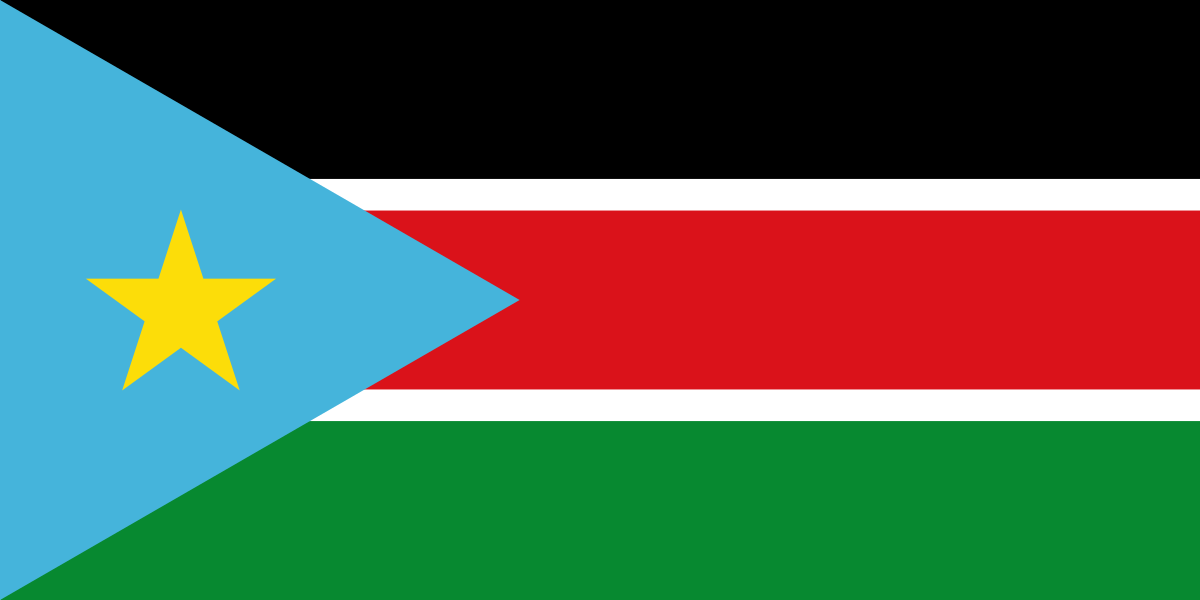
🏛️ Capital
Juba
👥 Population
15,786,898
📐 Area
619,745 km²
💱 Currency
South Sudanese pound (£)
🗣️ Languages
English
📞 Calling Code
+211
🕐 Time Zones
UTC+03:00
🌐 Region
Africa / Middle Africa
About South Sudan
South Sudan is the world's youngest country, having achieved independence from Sudan on July 9, 2011, after decades of devastating civil conflict. Located in the heart of sub-Saharan Africa, bordered by Sudan, Ethiopia, Kenya, Uganda, the Democratic Republic of Congo, and the Central African Republic, it is a vast and largely undeveloped land of immense natural beauty and deep cultural complexity. The country is home to the extraordinary Sudd — one of the world's largest wetlands and a crucial refugium for wildlife and migratory birds — as well as sweeping savannahs and lush greenery in its southern regions.
Travel to South Sudan is not for the faint-hearted. The country has experienced recurring internal conflict since its independence, and large parts remain unsafe for foreign visitors. However, for seasoned travellers and journalists operating within organised, well-supported expeditions, the country offers an extraordinary window into one of Africa's most culturally rich and largely undocumented corners. The Dinka, Nuer, Bari, and dozens of other ethnic groups maintain pastoralist and agropastoral traditions of extraordinary antiquity, and wildlife including large antelope herds, the Nile lechwe, and the elusive shoebill stork can be found in the Sudd and surrounding wetlands.
Juba, the capital, has grown rapidly since independence and houses a small but growing hospitality sector catering primarily to NGO workers, diplomats, and journalists. For those who do visit, South Sudan leaves a lasting impression — not as a conventional tourist destination, but as a place of raw, unfiltered humanity and natural wonder in the making.
Travel to South Sudan is not for the faint-hearted. The country has experienced recurring internal conflict since its independence, and large parts remain unsafe for foreign visitors. However, for seasoned travellers and journalists operating within organised, well-supported expeditions, the country offers an extraordinary window into one of Africa's most culturally rich and largely undocumented corners. The Dinka, Nuer, Bari, and dozens of other ethnic groups maintain pastoralist and agropastoral traditions of extraordinary antiquity, and wildlife including large antelope herds, the Nile lechwe, and the elusive shoebill stork can be found in the Sudd and surrounding wetlands.
Juba, the capital, has grown rapidly since independence and houses a small but growing hospitality sector catering primarily to NGO workers, diplomats, and journalists. For those who do visit, South Sudan leaves a lasting impression — not as a conventional tourist destination, but as a place of raw, unfiltered humanity and natural wonder in the making.
History & Background
The region that is now South Sudan was incorporated into British-Egyptian Sudan in the nineteenth century and later administered by Britain as part of the Anglo-Egyptian Condominium. The north-south divide that would eventually lead to independence was foreshadowed by British policies that treated the two regions distinctly — the predominantly Arab and Muslim north and the predominantly African and Christian or animist south developed under very different administrative frameworks.
The First Sudanese Civil War (1955–1972) and the far more devastating Second Sudanese Civil War (1983–2005) resulted in the deaths of over two million people and the displacement of millions more. The 2005 Comprehensive Peace Agreement paved the way for a referendum in 2011, in which an overwhelming 98.83% of southern Sudanese voted for independence. South Sudan became the world's 193rd recognised country on July 9, 2011 — a moment of jubilation quickly overshadowed by renewed civil conflict between 2013 and 2018, which claimed hundreds of thousands of lives. A peace agreement signed in 2018 brought a fragile but meaningful reduction in large-scale fighting.
The First Sudanese Civil War (1955–1972) and the far more devastating Second Sudanese Civil War (1983–2005) resulted in the deaths of over two million people and the displacement of millions more. The 2005 Comprehensive Peace Agreement paved the way for a referendum in 2011, in which an overwhelming 98.83% of southern Sudanese voted for independence. South Sudan became the world's 193rd recognised country on July 9, 2011 — a moment of jubilation quickly overshadowed by renewed civil conflict between 2013 and 2018, which claimed hundreds of thousands of lives. A peace agreement signed in 2018 brought a fragile but meaningful reduction in large-scale fighting.
Culture & People
South Sudan is one of the most ethnically diverse countries in Africa, with over 60 distinct ethnic groups and more than 60 languages spoken across its territory. The Dinka are the largest group, followed by the Nuer, and both communities are defined by a profound attachment to cattle, which represent wealth, status, social connection, and spiritual identity. Cattle raids, elaborate coming-of-age ceremonies, and intricately scarified skin patterns are central to the cultural identity of many groups in the country's interior.
Music, dance, and oral poetry carry enormous importance in South Sudanese society. The communal dances of the Dinka and Nuer — performed at weddings, seasonal celebrations, and community gatherings — are expressions of communal identity and joy. Christianity, brought by missionaries during British colonial administration, is the dominant religion in much of the south, though traditional animist beliefs remain deeply interwoven with daily life. Despite the immense hardships the country has endured, South Sudanese culture exhibits a remarkable vitality and warmth that surprises many first-time visitors to Juba.
Music, dance, and oral poetry carry enormous importance in South Sudanese society. The communal dances of the Dinka and Nuer — performed at weddings, seasonal celebrations, and community gatherings — are expressions of communal identity and joy. Christianity, brought by missionaries during British colonial administration, is the dominant religion in much of the south, though traditional animist beliefs remain deeply interwoven with daily life. Despite the immense hardships the country has endured, South Sudanese culture exhibits a remarkable vitality and warmth that surprises many first-time visitors to Juba.
Food & Cuisine
South Sudanese cuisine reflects the country's pastoral and agricultural traditions. Asida, a thick porridge made from sorghum or maize flour, is the staple food across most of the country and is eaten with stewed vegetables, dried fish, groundnut sauce, or the occasional meat dish. Ful medames — slow-cooked fava beans — reflects the cultural influence from the north and is popular in Juba, where it is commonly eaten for breakfast with flatbread and oil.
Juba's restaurant scene, though modest, has grown considerably since independence, catering to the large NGO and diplomatic community. You will find Ugandan, Ethiopian, Kenyan, and Western food alongside South Sudanese staples. The Nile perch, caught fresh from the White Nile, is a popular and excellent fish choice grilled or fried. Fresh tropical fruits including mangoes, papayas, and watermelons are abundant and cheap. Alcohol is available in Juba but less so in more conservative areas.
Juba's restaurant scene, though modest, has grown considerably since independence, catering to the large NGO and diplomatic community. You will find Ugandan, Ethiopian, Kenyan, and Western food alongside South Sudanese staples. The Nile perch, caught fresh from the White Nile, is a popular and excellent fish choice grilled or fried. Fresh tropical fruits including mangoes, papayas, and watermelons are abundant and cheap. Alcohol is available in Juba but less so in more conservative areas.
Top Attractions
- The Sudd Wetlands — One of the world's largest freshwater wetlands, home to extraordinary birdlife including the prehistoric shoebill stork, and hosting Africa's second-largest animal migration — the white-eared kob.
- Juba Waterfront — The banks of the White Nile in the capital offer riverside restaurants, sunset views, and a focal point for Juba's slowly developing social scene.
- Boma National Park — A vast, remote park in eastern South Sudan that hosts huge populations of tiang antelope and is part of one of Africa's most spectacular wildlife migration corridors.
- Nimule National Park — On the border with Uganda, this relatively accessible park supports elephant, buffalo, hippo, and crocodile populations along the Nile.
- Dinka Cultural Villages — With proper guidance and permission, visits to Dinka communities in the Greater Bahr el Ghazal region provide extraordinary cultural encounters with one of Africa's most distinctive pastoral peoples.
Practical Travel Tips
- Register with your country's embassy or consulate in Juba immediately on arrival and maintain regular contact; the security situation can change rapidly and evacuation plans need to be in place.
- Carry your visa and all documentation in original form at all times; checkpoints are common and security forces will inspect your papers.
- US dollars are the most widely used foreign currency; bring crisp, undamaged notes as older or torn bills are often refused.
- Arrange travel with a reputable local fixer or NGO-affiliated logistics provider; independent travel outside Juba carries significant risks that most solo travellers are not equipped to manage.
- Malaria prophylaxis is essential — South Sudan has one of the highest malaria burdens in the world, and mosquito nets and strong repellent are mandatory.
- Do not photograph military installations, checkpoints, soldiers, or government buildings under any circumstances; this is a serious offence that can result in detention.
Visa Overview
All foreign nationals require a visa to enter South Sudan. Tourist visas must be obtained in advance from a South Sudanese embassy or high commission; visa on arrival is not reliably available. The application process requires a valid passport, passport photos, a completed application form, and supporting letters from your employer or organisation. Processing times vary. Journalists require a separate media accreditation. Yellow fever vaccination is mandatory. All travellers are strongly advised to check current travel advisories from their government before applying, as access and safety conditions vary significantly across the country.
Getting Around
Transport infrastructure in South Sudan is extremely limited. Juba has paved roads and regular matatu minibuses and boda-boda motorcycle taxis, but travel outside the capital by road is often only possible with a 4WD vehicle and local knowledge of current conditions. Small charter aircraft operated by NGOs and private companies are frequently the only practical way to reach regional towns during or after the rainy season. The Nile is navigable and used for cargo and some passenger traffic. Hiring a vehicle with a local driver and fixer is strongly recommended for any travel outside Juba.
Safety Notes
South Sudan remains a high-risk destination and most governments advise against all non-essential travel to many areas. Armed conflict, banditry, and intercommunal violence have affected large parts of the country at various times since independence. Juba is relatively more stable but not without risk. Carjacking and armed robbery occur. Any travel requires thorough security briefings, communication equipment, emergency contacts, and ideally affiliation with an established NGO or reputable tour operator with on-ground security resources. Check your government's latest travel advisory immediately before any planned trip.
Live Exchange Rates
Current exchange rates for currencies used in South Sudan.
South Sudanese pound (SSP) £
Updated: 2026-10-06
South Sudanese pound (SSP) £
Updated: 2026-10-06
| Currency Code | Rate |
|---|---|
| 1INCH | 0.001652 |
| AAVE | 0.000001 |
| ADA | 0.000648 |
| AED | 0.000641 |
| AFN | 0.011283 |
| AKT | 0.000228 |
| ALGO | 0.001360 |
| ALL | 0.014323 |
| AMD | 0.063174 |
| AMP | 0.272330 |
| ANG | 0.000314 |
| AOA | 0.159957 |
| APE | 0.001090 |
| APT | 0.000213 |
| AR | 0.000039 |
| ARB | 0.000857 |
| ARS | 0.265413 |
| ATOM | 0.000096 |
| ATS | 0.002143 |
| AUD | 0.000251 |
| AVAX | 0.000015 |
| AWG | 0.000313 |
| AXS | 0.000133 |
| AZM | 1.484312 |
| AZN | 0.000297 |
| BAKE | 0.680330 |
| BAM | 0.000305 |
| BAT | 0.001655 |
| BBD | 0.000349 |
| BCH | 0.000001 |
| BDT | 0.021466 |
| BEF | 0.006281 |
| BGN | 0.000305 |
| BHD | 0.000066 |
| BIF | 0.524640 |
| BMD | 0.000175 |
| BNB | 0.000000 |
| BND | 0.000223 |
| BOB | 0.002095 |
| BRL | 0.000873 |
| BSD | 0.000175 |
| BSV | 0.000009 |
| BSW | 0.424358 |
| BTC | 0.000000 |
| BTCB | 0.002499 |
| BTG | 0.000265 |
| BTN | 0.016837 |
| BTT | 469.707727 |
| BUSD | 0.000175 |
| BWP | 0.002403 |
| BYN | 0.000533 |
| BYR | 3.423076 |
| BZD | 0.000351 |
| CAD | 0.000249 |
| CAKE | 0.000071 |
| CDF | 0.403552 |
| CELO | 0.001679 |
| CFX | 0.003182 |
| CHF | 0.000145 |
| CHZ | 0.010439 |
| CLP | 0.169913 |
| CNH | 0.001170 |
| CNY | 0.001171 |
| COMP | 0.000007 |
| COP | 0.558555 |
| CRC | 0.079905 |
| CRO | 0.002571 |
| CRV | 0.000474 |
| CSPR | 0.068458 |
| CUC | 0.000175 |
| CUP | 0.004183 |
| CVE | 0.017170 |
| CVX | 0.000079 |
| CYP | 0.000091 |
| CZK | 0.003809 |
| DAI | 0.000175 |
| DASH | 0.000003 |
| DCR | 0.000009 |
| DEM | 0.000305 |
| DFI | 0.191064 |
| DJF | 0.031066 |
| DKK | 0.001164 |
| DOGE | 0.001842 |
| DOP | 0.010465 |
| DOT | 0.000141 |
| DYDX | 0.001195 |
| DZD | 0.023474 |
| EEK | 0.002436 |
| EGLD | 0.000039 |
| EGP | 0.009155 |
| ENJ | 0.005275 |
| EOS | 0.001718 |
| ERN | 0.002619 |
| ESP | 0.025907 |
| ETB | 0.028404 |
| ETC | 0.000020 |
| ETH | 0.000000 |
| EUR | 0.000156 |
| EURC | 0.000156 |
| FEI | 0.000175 |
| FIL | 0.000146 |
| FIM | 0.000926 |
| FJD | 0.000393 |
| FKP | 0.000132 |
| FLOW | 0.005519 |
| FLR | 0.024226 |
| FRAX | 0.000176 |
| FRF | 0.001021 |
| FTT | 0.000676 |
| GALA | 0.072074 |
| GBP | 0.000132 |
| GEL | 0.000453 |
| GGP | 0.000132 |
| GHC | 20.529778 |
| GHS | 0.002053 |
| GIP | 0.000132 |
| GMD | 0.012924 |
| GMX | 0.000020 |
| GNF | 1.535311 |
| GNO | 0.000001 |
| GRD | 0.053057 |
| GRT | 0.005997 |
| GT | 0.000016 |
| GTQ | 0.001333 |
| GUSD | 0.000175 |
| GYD | 0.036452 |
| HBAR | 0.001735 |
| HKD | 0.001370 |
| HNL | 0.004682 |
| HNT | 0.000337 |
| HOT | 0.381306 |
| HRK | 0.001173 |
| HT | 0.004788 |
| HTG | 0.022818 |
| HUF | 0.057199 |
| ICP | 0.000050 |
| IDR | 3.128406 |
| IEP | 0.000123 |
| ILS | 0.000534 |
| IMP | 0.000132 |
| IMX | 0.000952 |
| INJ | 0.000023 |
| INR | 0.016837 |
| IQD | 0.228291 |
| IRR | 314.063334 |
| ISK | 0.021321 |
| ITL | 0.301490 |
| JEP | 0.000132 |
| JMD | 0.027633 |
| JOD | 0.000124 |
| JPY | 0.027610 |
| KAS | 0.004070 |
| KAVA | 0.002519 |
| KCS | 0.000023 |
| KDA | 0.017886 |
| KES | 0.022668 |
| KGS | 0.015272 |
| KHR | 0.707414 |
| KLAY | 0.004193 |
| KMF | 0.076603 |
| KNC | 0.001219 |
| KPW | 0.157182 |
| KRW | 0.234425 |
| KSM | 0.000034 |
| KWD | 0.000054 |
| KYD | 0.000145 |
| KZT | 0.079502 |
| LAK | 3.918309 |
| LBP | 15.747921 |
| LDO | 0.000381 |
| LEO | 0.000020 |
| LINK | 0.000013 |
| LKR | 0.057596 |
| LRC | 0.017008 |
| LRD | 0.029799 |
| LSL | 0.002907 |
| LTC | 0.000003 |
| LTL | 0.000538 |
| LUF | 0.006281 |
| LUNA | 0.003420 |
| LUNC | 3.302506 |
| LVL | 0.000109 |
| LYD | 0.001120 |
| MAD | 0.001743 |
| MANA | 0.001689 |
| MBX | 0.005904 |
| MDL | 0.003130 |
| MGA | 0.773306 |
| MGF | 3.866531 |
| MINA | 0.001296 |
| MKD | 0.009580 |
| MKR | 0.000000 |
| MMK | 0.366563 |
| MNT | 0.627799 |
| MOP | 0.001411 |
| MRO | 0.069914 |
| MRU | 0.006991 |
| MTL | 0.000067 |
| MUR | 0.008278 |
| MVR | 0.002700 |
| MWK | 0.302242 |
| MXN | 0.003156 |
| MXV | 0.000359 |
| MYR | 0.000713 |
| MZM | 11.146029 |
| MZN | 0.011146 |
| NAD | 0.002907 |
| NEAR | 0.000033 |
| NEO | 0.000069 |
| NEXO | 0.000205 |
| NFT | 731.784579 |
| NGN | 0.230859 |
| NIO | 0.006420 |
| NLG | 0.000343 |
| NOK | 0.001676 |
| NPR | 0.026951 |
| NZD | 0.000312 |
| OKB | 0.000001 |
| OMR | 0.000067 |
| ONE | 0.001192 |
| OP | 0.001299 |
| ORDI | 0.000038 |
| PAB | 0.000175 |
| PAXG | 0.000000 |
| PEN | 0.000601 |
| PEPE | 40.376722 |
| PGK | 0.000787 |
| PHP | 0.010974 |
| PI | 0.002000 |
| PKR | 0.048283 |
| PLN | 0.000682 |
| POL | 0.001597 |
| PTE | 0.031216 |
| PYG | 1.020143 |
| QAR | 0.000636 |
| QNT | 0.000001 |
| QTUM | 0.000178 |
| ROL | 8.323048 |
| RON | 0.000832 |
| RPL | 0.000091 |
| RSD | 0.018288 |
| RUB | 0.014815 |
| RUNE | 0.000225 |
| RVN | 0.071172 |
| RWF | 0.257389 |
| SAND | 0.002656 |
| SAR | 0.000655 |
| SBD | 0.001409 |
| SCR | 0.002473 |
| SDD | 10.480510 |
| SDG | 0.104805 |
| SEK | 0.001754 |
| SGD | 0.000223 |
| SHIB | 29.830876 |
| SHP | 0.000132 |
| SIT | 0.037313 |
| SKK | 0.004691 |
| SLE | 0.004026 |
| SLL | 4.025905 |
| SNX | 0.000697 |
| SOL | 0.000001 |
| SOS | 0.099352 |
| SPL | 0.000029 |
| SRD | 0.006584 |
| SRG | 6.584288 |
| STD | 3.841840 |
| STN | 0.003842 |
| STX | 0.000466 |
| SUI | 0.000146 |
| SVC | 0.001528 |
| SYP | 2.270757 |
| SZL | 0.002907 |
| THB | 0.005878 |
| THETA | 0.000754 |
| TJS | 0.001607 |
| TMM | 3.064083 |
| TMT | 0.000613 |
| TND | 0.000523 |
| TOP | 0.000421 |
| TRL | 8,587.169394 |
| TRX | 0.000520 |
| TRY | 0.008587 |
| TTD | 0.001182 |
| TUSD | 0.000175 |
| TVD | 0.000251 |
| TWD | 0.005550 |
| TWT | 0.000306 |
| TZS | 0.460722 |
| UAH | 0.007865 |
| UGX | 0.702008 |
| UNI | 0.000020 |
| USD | 0.000175 |
| USDC | 0.000175 |
| USDD | 0.000175 |
| USDP | 0.000176 |
| USDT | 0.000175 |
| UYU | 0.007054 |
| UZS | 2.054104 |
| VAL | 0.301490 |
| VEB | 15,204,818.089007 |
| VED | 0.152048 |
| VEF | 15,204.818089 |
| VES | 0.152048 |
| VET | 0.020010 |
| VND | 4.539379 |
| VUV | 0.020992 |
| WAVES | 0.000585 |
| WEMIX | 0.000912 |
| WOO | 0.012757 |
| WST | 0.000486 |
| XAF | 0.102137 |
| XAG | 0.000003 |
| XAU | 0.000000 |
| XAUT | 0.000000 |
| XBT | 0.000000 |
| XCD | 0.000473 |
| XCG | 0.000314 |
| XCH | 0.000112 |
| XDC | 0.005196 |
| XDR | 0.000129 |
| XEC | 21.897866 |
| XEM | 0.278137 |
| XLM | 0.000809 |
| XMR | 0.000000 |
| XOF | 0.102137 |
| XPD | 0.000000 |
| XPF | 0.018581 |
| XPT | 0.000000 |
| XRP | 0.000116 |
| XTZ | 0.000523 |
| YER | 0.041245 |
| ZAR | 0.002907 |
| ZEC | 0.000000 |
| ZIL | 0.047854 |
| ZMK | 3.452350 |
| ZMW | 0.003452 |
| ZWD | 0.063196 |
| ZWG | 0.004675 |
| ZWL | 11.681320 |
No currencies match your search.
Cities in South Sudan 185
Browse all cities and towns
Cities in South Sudan 185
Browse all cities and towns
Abiemnhom
Abukadara
Adong
Aduel
Agangrial
Akak
Akobo Town
Akuem
Alek
Anyidi
Aroyo
Atar
Aweil
Bagari
Baliet
Ban Jallo
Barriak
Bauw
Bazi
Bëntiw
Bereka
Bisellia
Boma
Bor
Bunj
Bwong
Canal
CITY OF KAJO KEJI
Cueibet
Cuhudum
dhuɔrɛdiŋ
Dik Mareeng
Diŋkar
Dok
Dɔmɛ
Duk Padiet
Duk Payuel
El Seriha
Ezo
Gadiang
Geigar
Girbanat
Gogrial
Gok Machar
Gui̱t
Gumuruk
HILAL (CAMP-15)
Huntau
Ibba
Ikotos
Jalhak
jamam town
Jambo
Jau
Juba
Kajo Keji
Kaka
Kapoeta
Kassangor
Kaya
Kediba
Keyala
Ki̱ec Kun
Kimotong
Knich
köbɛ
Ko̱c
Kodok
Kuajiena
Kuajok
KuanyLualThɔ̱a̱n
Labone
Lafon
Lainya
Lankien
Lɛ̈r
Liet-Nhom
Likuangole
Lobira
Lui
Mabior
Mabior
Madiŋ
Magwi
Maiwut
Malakal
Malek Alel
Mandɛ̈ŋ
Mankien
Maper
Maridi
Mathiaŋ
Mayiandi̱t
Mayɔm
Melut
Minkamman
Mir Mir
Mogiri
Moli
Mongalla
Morobo
Motot
Mulbok
Mundri
Mvolo
Nadupongor
Nagero
Narus
New Fangak
New Palouch
Ngauro
Nhialdiu
Nimni
Nimule
Nyal
Nyamliell
Nyang
Nyin Akok
Nzara
Old Fangak
Owiny Kibul
Padak
Pagak (South Sudan)
Paguir
Pajok
Pajut
Paloich
Panipandiar
Panyi̱ji̱ar
Pariak
Pariang
Pibor
Pochalla
Poktap
Pulchol
Pulturuk
Raja
Renk
Riang
Riang Aketh
Rier Market
Riwoto
Rokon
Romich
Ruath-Nyibol
Rubkona Market
Rumbek
Rupkuai
Shambe
Tali
Tambura
Terekeka
Thiet
Tindalo
Tonga
Tonj
Torakit
Tore
Torit
Turalei
Turaybah
Ulaŋ
Wa̱a̱t
Wadakona
Walgak
Wanyjok
Waŋkɛy
Warrap
Wau
Wau
Weenyal
Werngueny
Wernyol
Wonduruba
Wulu
Yambio
Yei
Yida
Yi̱o̱d
Yirol
Yuai
أكوك Agok
أم حجار
المقينص
كافيا كنجي
Visa Requirements
Check what visa a citizen of South Sudan needs to enter any country.
Frequently Asked Questions
What is the capital of South Sudan?
The capital of South Sudan is Juba.
What currency does South Sudan use?
South Sudan uses the South Sudanese pound (£) as its official currency.
What language is spoken in South Sudan?
The official language(s) of South Sudan include English.
What is the population of South Sudan?
South Sudan has a population of approximately 15,786,898 people.
What region is South Sudan in?
South Sudan is located in Africa, specifically in the Middle Africa subregion.
What is the international calling code for South Sudan?
The international dialing code for South Sudan is +211.
What time zones does South Sudan observe?
South Sudan observes the following time zone(s): UTC+03:00.
What is the current time in South Sudan?
The local time in South Sudan is currently --:--. This time applies to the primary time zone.
What is the total area of South Sudan?
South Sudan covers a total area of 619,745 km².
How many states or provinces does South Sudan have?
South Sudan is divided into 12 states or provinces.
What are the public holidays in South Sudan in 2026?
You can view the complete list of public holidays for South Sudan in 2026 on the Holidays 2026 page.
What are the visa requirements for citizens of South Sudan?
Visa requirements for citizens of South Sudan vary by destination. Use our Visa Requirements Checker below to look up requirements for any destination country.