
Oceania · Polynesia
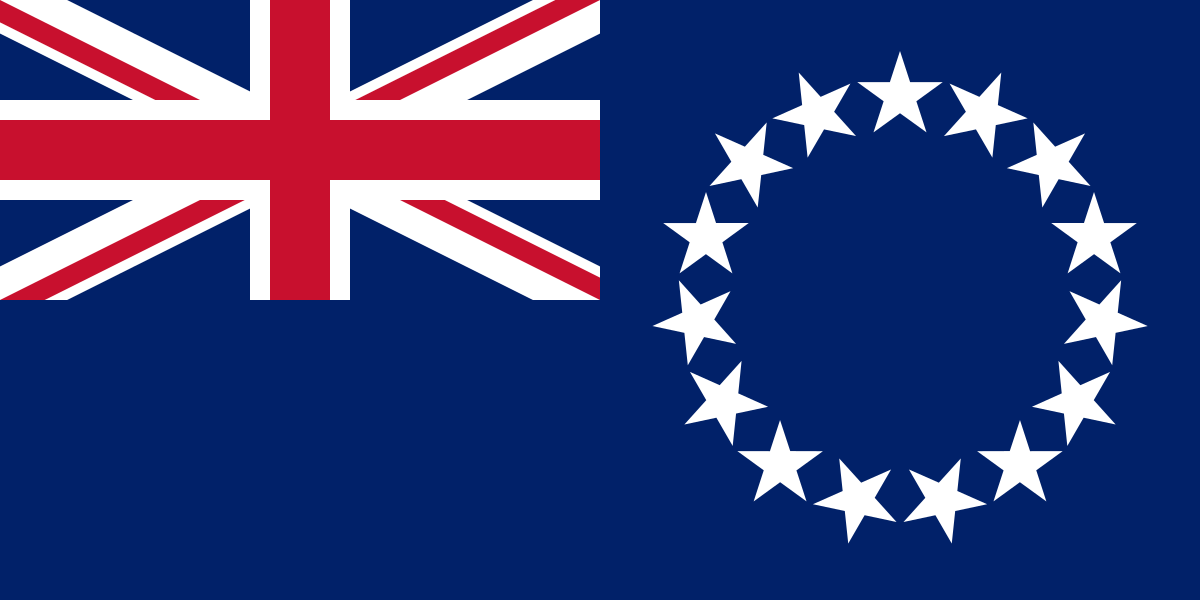
Cook Islands
🏛️ Capital
Avarua
👥 Population
15,040
📐 Area
236 km²
💱 Currency
Cook Islands dollar ($), New Zealand dollar ($)
🗣️ Languages
English, Cook Islands Māori
📞 Calling Code
+682
🕐 Time Zones
UTC-10:00
🌐 Region
Oceania / Polynesia
About Cook Islands
The Cook Islands are what most people imagine when they dream of a South Pacific island paradise — and then discover the reality is even more beautiful than the fantasy. This self-governing nation in free association with New Zealand consists of 15 islands scattered across 2.2 million square kilometers of the central South Pacific Ocean, yet their combined land area is barely 236 square kilometers. What they lack in size they more than compensate for in the richness of their lagoons, the warmth of their Polynesian culture, and the sheer sensory perfection of their natural environments.
Rarotonga, the main island, is dominated by a dramatic interior of ancient volcanic peaks and lush rainforest, encircled by a lagoon of such improbable blue-green color that photographs consistently look photoshopped to first-time visitors. The island's small size — you can circumnavigate it by scooter in about an hour — makes it intimately accessible, and its friendly, laid-back atmosphere is a world apart from more developed Pacific resorts. The outer island of Aitutaki, just a short flight away, contains what many travel writers have called the most beautiful lagoon in the world: an enormous, shallow, heart-shaped expanse of impossibly turquoise water studded with white sand motus (islets).
Beyond the beauty of land and sea, the Cook Islands offer something increasingly rare in modern travel: an authentic Polynesian culture that is very much alive and confidently expressed. From the exhilarating dance performances at weekly island nights to the traditional fishing methods still practiced by local families, from the ancient marae (ceremonial sites) hidden in the interior forest to the fresh ika mata (raw fish in coconut cream) served at every family table, the Cook Islands offer a window into a Pacific way of life that feels genuine, proud, and deeply rooted.
Rarotonga, the main island, is dominated by a dramatic interior of ancient volcanic peaks and lush rainforest, encircled by a lagoon of such improbable blue-green color that photographs consistently look photoshopped to first-time visitors. The island's small size — you can circumnavigate it by scooter in about an hour — makes it intimately accessible, and its friendly, laid-back atmosphere is a world apart from more developed Pacific resorts. The outer island of Aitutaki, just a short flight away, contains what many travel writers have called the most beautiful lagoon in the world: an enormous, shallow, heart-shaped expanse of impossibly turquoise water studded with white sand motus (islets).
Beyond the beauty of land and sea, the Cook Islands offer something increasingly rare in modern travel: an authentic Polynesian culture that is very much alive and confidently expressed. From the exhilarating dance performances at weekly island nights to the traditional fishing methods still practiced by local families, from the ancient marae (ceremonial sites) hidden in the interior forest to the fresh ika mata (raw fish in coconut cream) served at every family table, the Cook Islands offer a window into a Pacific way of life that feels genuine, proud, and deeply rooted.
History & Background
The Cook Islands were first settled by Polynesian voyagers from the Society Islands around 1000 AD, part of the extraordinary navigational tradition that populated the Pacific from Hawaii to New Zealand. These early settlers developed a sophisticated agricultural and fishing society, establishing the marae ceremonial sites and hierarchical chiefly system whose legacy is still felt in local governance. The islands were first sighted by Spanish explorer Álvaro de Mendaña in 1595 and later mapped by Captain James Cook in the 1770s, who gave his name to the archipelago, though ironically he never actually landed there.
Christian missionaries from the London Missionary Society arrived in 1821 and transformed the islands' social and cultural landscape profoundly, abolishing traditional practices while establishing literacy, schools, and a new moral framework. The Cook Islands became a British protectorate in 1888 and were annexed to New Zealand in 1901. The 1965 Cook Islands Constitution Act granted self-governing status in free association with New Zealand — a unique political arrangement that gives Cook Islanders full New Zealand citizenship and access to New Zealand services while maintaining sovereignty over their own affairs. Today the Cook Islands navigate the balance between preserving Polynesian identity and managing the pressures of tourism and emigration to New Zealand and Australia.
Christian missionaries from the London Missionary Society arrived in 1821 and transformed the islands' social and cultural landscape profoundly, abolishing traditional practices while establishing literacy, schools, and a new moral framework. The Cook Islands became a British protectorate in 1888 and were annexed to New Zealand in 1901. The 1965 Cook Islands Constitution Act granted self-governing status in free association with New Zealand — a unique political arrangement that gives Cook Islanders full New Zealand citizenship and access to New Zealand services while maintaining sovereignty over their own affairs. Today the Cook Islands navigate the balance between preserving Polynesian identity and managing the pressures of tourism and emigration to New Zealand and Australia.
Culture & People
Cook Islands Maori culture is the living heartbeat of these islands, maintained with remarkable vitality and pride despite the considerable influence of New Zealand and the global tourism industry. Language is central to cultural identity — Cook Islands Maori (Rarotongan) is an official language alongside English, and you will hear it spoken freely in markets, churches, and family homes. Christianity, particularly the Cook Islands Christian Church (a legacy of 19th-century missionary activity), is deeply intertwined with community life, and Sunday is treated as a genuine day of rest and worship, with most businesses closed and church singing echoing beautifully across the island in the morning.
Dance and music are perhaps the most visible expressions of Cook Islands culture. The traditional ura dance — featuring extraordinary speed, athleticism, and intricate hip movements that put Tahitian ori to shame for sheer energy — is performed at weekly cultural shows and takes years of dedicated training to master. Tivaivai, elaborately stitched patchwork quilts used for ceremonial purposes and as treasured family gifts, represent another high art form unique to the islands. Fishing, weaving, carving, and the cooperative social institution of oire (community) remain important pillars of island life, giving the Cook Islands a cultural richness that rewards any visitor who takes time to look beyond the lagoon.
Dance and music are perhaps the most visible expressions of Cook Islands culture. The traditional ura dance — featuring extraordinary speed, athleticism, and intricate hip movements that put Tahitian ori to shame for sheer energy — is performed at weekly cultural shows and takes years of dedicated training to master. Tivaivai, elaborately stitched patchwork quilts used for ceremonial purposes and as treasured family gifts, represent another high art form unique to the islands. Fishing, weaving, carving, and the cooperative social institution of oire (community) remain important pillars of island life, giving the Cook Islands a cultural richness that rewards any visitor who takes time to look beyond the lagoon.
Food & Cuisine
Cook Islands cuisine is a celebration of Pacific abundance — fresh fish, tropical fruit, root vegetables, and coconut in seemingly endless delicious combinations. The signature dish is ika mata, raw fish (typically tuna or mahi-mahi) marinated in freshly squeezed lime juice and then mixed with creamy coconut cream, diced tomato, cucumber, and spring onion. It is eaten for breakfast, lunch, and dinner across the islands and is one of those perfect dishes that tastes exactly as good as it sounds. Rukau — young taro leaves cooked in coconut cream — is another island staple served at every family feast (umu).
The traditional umu (earth oven) feast is an important cultural institution, used for Sunday church lunches, weddings, and celebrations. Food is wrapped in banana leaves and cooked over heated stones underground, producing extraordinarily tender and fragrant results. Whole roasted pig, breadfruit, sweet potato, fish, and palusami (taro leaves with coconut cream) are the umu classics. The main Avarua market on Saturday mornings is the best place to experience Cook Islands food culture informally — fresh fruit, baked goods, freshly cooked snacks, and the buzz of community life make it an unmissable experience for any visitor.
The traditional umu (earth oven) feast is an important cultural institution, used for Sunday church lunches, weddings, and celebrations. Food is wrapped in banana leaves and cooked over heated stones underground, producing extraordinarily tender and fragrant results. Whole roasted pig, breadfruit, sweet potato, fish, and palusami (taro leaves with coconut cream) are the umu classics. The main Avarua market on Saturday mornings is the best place to experience Cook Islands food culture informally — fresh fruit, baked goods, freshly cooked snacks, and the buzz of community life make it an unmissable experience for any visitor.
Top Attractions
- Aitutaki Lagoon — Consistently ranked among the world's most beautiful lagoons, this enormous heart-shaped expanse of crystal-clear turquoise water is dotted with white sand motus and teeming with marine life.
- Muri Lagoon, Rarotonga — A stunning shallow lagoon on Rarotonga's southeast coast, perfect for kayaking to the four motus, snorkeling over coral gardens, and watching the sunset turn the water gold.
- Te Vara Nui Cultural Village — An evening overwater show featuring traditional Cook Islands dance, umu feast, and cultural demonstrations — one of the Pacific's finest cultural experiences.
- Cross-Island Trek, Rarotonga — A guided hike through ancient rainforest to the summit of the Needle rock pinnacle, with views over both coasts and the surrounding ocean.
- Punanga Nui Market, Avarua — The island's Saturday morning market bursting with fresh produce, handicrafts, cooked food, and the warm energy of Cook Islands community life.
Practical Travel Tips
- Rent a scooter or bicycle on Rarotonga — the island's single circular road is only 32 kilometers long, and two wheels are the perfect way to explore at your own pace.
- Visit Aitutaki on a day trip from Rarotonga if a longer stay is not possible — the lagoon cruise to the motus is an absolute highlight and worth every cent.
- Bring reef-safe, biodegradable sunscreen to protect the fragile lagoon ecosystem — chemical sunscreens are harmful to coral and their use is increasingly discouraged.
- Respect Sunday customs — most shops, restaurants, and activities are closed for the day; plan ahead with groceries and a relaxed attitude.
- New Zealand dollars and Cook Islands dollars are accepted everywhere; ATMs are available in Avarua but are limited on outer islands.
- Book accommodation and Aitutaki lagoon cruises well in advance during the July–August peak season and around the Te Maeva Nui festival.
- The cross-island trek on Rarotonga requires a guide — do not attempt it alone; the interior jungle is dense and trails can be disorienting.
Visa Overview
The Cook Islands do not require a visa for visitors from most countries, including the United States, United Kingdom, European Union, Australia, Canada, and New Zealand, for stays of up to 31 days. On arrival, you will receive a visitor's permit that can be extended up to a maximum of 183 days at the Immigration Department in Avarua. You must have a valid passport (at least six months validity recommended), proof of onward travel, and sufficient funds for your stay. Cook Islands citizens also hold New Zealand citizenship. Check the latest entry requirements with the Cook Islands Immigration Service before travel.
Getting Around
Air Rarotonga operates regular inter-island flights connecting Rarotonga to Aitutaki, Atiu, Mauke, Mitiaro, Mangaia, and other outer islands — a flight to Aitutaki takes about 45 minutes. International flights to Rarotonga operate from Auckland, Sydney, and Los Angeles, primarily with Air New Zealand. On Rarotonga, a public bus (the Cook Islands Bus) runs clockwise and anticlockwise circuits of the island affordably. Scooter hire and car hire are widely available and the most practical way to explore independently. On outer islands, local transportation is informal — your accommodation host will help arrange everything needed.
Safety Notes
The Cook Islands are one of the safest destinations in the Pacific. Crime is rare, and the small, community-oriented population means visitors are generally very well looked after. Ocean safety is the primary concern: currents can be strong in channels and around reef passes, and the outer ocean beyond the lagoon edge should be treated with great respect. Always check conditions before snorkeling or swimming in unfamiliar areas and follow local advice. The wet season brings cyclone risk — monitor forecasts and have an emergency plan if visiting between December and March. Medical facilities are limited; serious cases are evacuated to New Zealand.
Live Exchange Rates
Current exchange rates for currencies used in Cook Islands.
New Zealand dollar (NZD) $
Updated: 2026-10-06
New Zealand dollar (NZD) $
Updated: 2026-10-06
| Currency Code | Rate |
|---|---|
| 1INCH | 5.294529 |
| AAVE | 0.003080 |
| ADA | 2.077204 |
| AED | 2.055606 |
| AFN | 36.164815 |
| AKT | 0.731409 |
| ALGO | 4.358328 |
| ALL | 45.911367 |
| AMD | 202.497034 |
| AMP | 872.916167 |
| ANG | 1.006516 |
| AOA | 512.719233 |
| APE | 3.493595 |
| APT | 0.681756 |
| AR | 0.124167 |
| ARB | 2.745604 |
| ARS | 850.744781 |
| ATOM | 0.307429 |
| ATS | 6.867709 |
| AUD | 0.803197 |
| AVAX | 0.049298 |
| AWG | 1.001916 |
| AXS | 0.427394 |
| AZM | 4,757.765000 |
| AZN | 0.951553 |
| BAKE | 2,180.706218 |
| BAM | 0.976147 |
| BAT | 5.306357 |
| BBD | 1.119459 |
| BCH | 0.001771 |
| BDT | 68.807530 |
| BEF | 20.133478 |
| BGN | 0.976147 |
| BHD | 0.210458 |
| BIF | 1,681.663187 |
| BMD | 0.559729 |
| BNB | 0.000716 |
| BND | 0.716163 |
| BOB | 6.714450 |
| BRL | 2.797931 |
| BSD | 0.559729 |
| BSV | 0.028031 |
| BSW | 1,360.223736 |
| BTC | 0.000007 |
| BTCB | 8.011046 |
| BTG | 0.848433 |
| BTN | 53.968020 |
| BTT | 1,505,585.361115 |
| BUSD | 0.559635 |
| BWP | 7.703691 |
| BYN | 1.707580 |
| BYR | 10,972.214179 |
| BZD | 1.125670 |
| CAD | 0.798655 |
| CAKE | 0.228880 |
| CDF | 1,293.532292 |
| CELO | 5.382073 |
| CFX | 10.200806 |
| CHF | 0.465556 |
| CHZ | 33.461423 |
| CLP | 544.632993 |
| CNH | 3.751877 |
| CNY | 3.753078 |
| COMP | 0.022836 |
| COP | 1,790.372390 |
| CRC | 256.124833 |
| CRO | 8.242520 |
| CRV | 1.518336 |
| CSPR | 219.432410 |
| CUC | 0.559807 |
| CUP | 13.407651 |
| CVE | 55.035304 |
| CVX | 0.252859 |
| CYP | 0.292108 |
| CZK | 12.209868 |
| DAI | 0.559957 |
| DASH | 0.009874 |
| DCR | 0.030352 |
| DEM | 0.976147 |
| DFI | 612.428738 |
| DJF | 99.576401 |
| DKK | 3.730264 |
| DOGE | 5.903205 |
| DOP | 33.545200 |
| DOT | 0.452391 |
| DYDX | 3.830930 |
| DZD | 75.242430 |
| EEK | 7.809174 |
| EGLD | 0.125237 |
| EGP | 29.345534 |
| ENJ | 16.907795 |
| EOS | 5.507956 |
| ERN | 8.395941 |
| ESP | 83.042569 |
| ETB | 91.046650 |
| ETC | 0.063077 |
| ETH | 0.000207 |
| EUR | 0.499096 |
| EURC | 0.499029 |
| FEI | 0.559974 |
| FIL | 0.468915 |
| FIM | 2.967489 |
| FJD | 1.259444 |
| FKP | 0.423590 |
| FLOW | 17.690798 |
| FLR | 77.652786 |
| FRAX | 0.565396 |
| FRF | 3.273854 |
| FTT | 2.166787 |
| GALA | 231.022447 |
| GBP | 0.423590 |
| GEL | 1.452771 |
| GGP | 0.423590 |
| GHC | 65,805.459824 |
| GHS | 6.580546 |
| GIP | 0.423590 |
| GMD | 41.426157 |
| GMX | 0.063750 |
| GNF | 4,921.235154 |
| GNO | 0.004609 |
| GRD | 170.066924 |
| GRT | 19.223282 |
| GT | 0.050000 |
| GTQ | 4.271532 |
| GUSD | 0.560883 |
| GYD | 116.843200 |
| HBAR | 5.560151 |
| HKD | 4.392450 |
| HNL | 15.008490 |
| HNT | 1.078691 |
| HOT | 1,222.224139 |
| HRK | 3.760438 |
| HT | 15.346125 |
| HTG | 73.140947 |
| HUF | 183.344402 |
| ICP | 0.160533 |
| IDR | 10,027.686517 |
| IEP | 0.393070 |
| ILS | 1.711739 |
| IMP | 0.423590 |
| IMX | 3.052597 |
| INJ | 0.073843 |
| INR | 53.968020 |
| IQD | 731.755775 |
| IRR | 1,006,688.054709 |
| ISK | 68.341862 |
| ITL | 966.384396 |
| JEP | 0.423590 |
| JMD | 88.574665 |
| JOD | 0.396848 |
| JPY | 88.499600 |
| KAS | 13.047010 |
| KAVA | 8.073944 |
| KCS | 0.073731 |
| KDA | 57.330693 |
| KES | 72.657860 |
| KGS | 48.953191 |
| KHR | 2,267.521914 |
| KLAY | 13.439405 |
| KMF | 245.539081 |
| KNC | 3.907710 |
| KPW | 503.826339 |
| KRW | 751.416574 |
| KSM | 0.109253 |
| KWD | 0.173016 |
| KYD | 0.465311 |
| KZT | 254.832962 |
| LAK | 12,559.616921 |
| LBP | 50,477.858032 |
| LDO | 1.221902 |
| LEO | 0.062944 |
| LINK | 0.040469 |
| LKR | 184.616850 |
| LRC | 54.518305 |
| LRD | 95.517205 |
| LSL | 9.318875 |
| LTC | 0.008035 |
| LTL | 1.723278 |
| LUF | 20.133478 |
| LUNA | 10.960926 |
| LUNC | 10,585.741070 |
| LVL | 0.350765 |
| LYD | 3.591284 |
| MAD | 5.586476 |
| MANA | 5.412632 |
| MBX | 18.925318 |
| MDL | 10.031536 |
| MGA | 2,478.729715 |
| MGF | 12,393.648573 |
| MINA | 4.154485 |
| MKD | 30.707635 |
| MKR | 0.000278 |
| MMK | 1,174.969739 |
| MNT | 2,012.325462 |
| MOP | 4.524223 |
| MRO | 224.098597 |
| MRU | 22.409860 |
| MTL | 0.214262 |
| MUR | 26.532420 |
| MVR | 8.653229 |
| MWK | 968.796137 |
| MXN | 10.117242 |
| MXV | 1.150131 |
| MYR | 2.286860 |
| MZM | 35,727.105645 |
| MZN | 35.727106 |
| NAD | 9.318875 |
| NEAR | 0.107113 |
| NEO | 0.220845 |
| NEXO | 0.658211 |
| NFT | 2,345,637.696117 |
| NGN | 739.987283 |
| NIO | 20.577424 |
| NLG | 1.099863 |
| NOK | 5.372204 |
| NPR | 86.389308 |
| OKB | 0.004293 |
| OMR | 0.215417 |
| ONE | 3.821615 |
| OP | 4.163789 |
| ORDI | 0.123020 |
| PAB | 0.559729 |
| PAXG | 0.000135 |
| PEN | 1.927217 |
| PEPE | 129,422.187716 |
| PGK | 2.521735 |
| PHP | 35.176937 |
| PI | 6.412114 |
| PKR | 154.765332 |
| PLN | 2.186354 |
| POL | 5.118444 |
| PTE | 100.059742 |
| PYG | 3,269.933102 |
| QAR | 2.037415 |
| QNT | 0.002164 |
| QTUM | 0.571009 |
| ROL | 26,678.416955 |
| RON | 2.667842 |
| RPL | 0.292716 |
| RSD | 58.621014 |
| RUB | 47.487353 |
| RUNE | 0.720949 |
| RVN | 228.133051 |
| RWF | 825.024814 |
| SAND | 8.511896 |
| SAR | 2.098985 |
| SBD | 4.516283 |
| SCR | 7.927862 |
| SDD | 33,593.875010 |
| SDG | 335.938750 |
| SEK | 5.622296 |
| SGD | 0.716163 |
| SHIB | 95,618.886701 |
| SHP | 0.423590 |
| SIT | 119.603339 |
| SKK | 15.035763 |
| SLE | 12.904500 |
| SLL | 12,904.499681 |
| SNX | 2.235559 |
| SOL | 0.004665 |
| SOS | 318.459397 |
| SPL | 0.093288 |
| SRD | 21.105055 |
| SRG | 21,105.054665 |
| SSP | 3,205.366392 |
| STD | 12,314.503996 |
| STN | 12.314504 |
| STX | 1.493668 |
| SUI | 0.468996 |
| SVC | 4.897632 |
| SYP | 7,278.608753 |
| SZL | 9.318875 |
| THB | 18.840297 |
| THETA | 2.417240 |
| TJS | 5.151547 |
| TMM | 9,821.509735 |
| TMT | 1.964302 |
| TND | 1.675171 |
| TOP | 1.348079 |
| TRL | 27,525,024.178297 |
| TRX | 1.665686 |
| TRY | 27.525024 |
| TTD | 3.789784 |
| TUSD | 0.560172 |
| TVD | 0.803197 |
| TWD | 17.789236 |
| TWT | 0.980486 |
| TZS | 1,476.782956 |
| UAH | 25.209817 |
| UGX | 2,250.193706 |
| UNI | 0.063179 |
| USD | 0.559729 |
| USDC | 0.559882 |
| USDD | 0.560127 |
| USDP | 0.563057 |
| USDT | 0.560013 |
| UYU | 22.610877 |
| UZS | 6,584.155705 |
| VAL | 966.384396 |
| VEB | 48,737,012,899.6797 |
| VED | 487.370129 |
| VEF | 48,737,012.899680 |
| VES | 487.370129 |
| VET | 64.140600 |
| VND | 14,550.371572 |
| VUV | 67.286224 |
| WAVES | 1.876197 |
| WEMIX | 2.922781 |
| WOO | 40.890879 |
| WST | 1.557835 |
| XAF | 327.385442 |
| XAG | 0.009251 |
| XAU | 0.000136 |
| XAUT | 0.000136 |
| XBT | 0.000007 |
| XCD | 1.515143 |
| XCG | 1.006516 |
| XCH | 0.357658 |
| XDC | 16.656125 |
| XDR | 0.413729 |
| XEC | 70,190.682217 |
| XEM | 891.531779 |
| XLM | 2.593523 |
| XMR | 0.000998 |
| XOF | 327.385442 |
| XPD | 0.000480 |
| XPF | 59.557982 |
| XPT | 0.000327 |
| XRP | 0.372538 |
| XTZ | 1.675271 |
| YER | 132.206803 |
| ZAR | 9.318875 |
| ZEC | 0.000418 |
| ZIL | 153.388887 |
| ZMK | 11,066.046488 |
| ZMW | 11.066046 |
| ZWD | 202.566066 |
| ZWG | 14.984811 |
| ZWL | 37,442.911029 |
No currencies match your search.
Visa Requirements
Check what visa a citizen of Cook Islands needs to enter any country.
Frequently Asked Questions
What is the capital of Cook Islands?
The capital of Cook Islands is Avarua.
What currency does Cook Islands use?
Cook Islands uses the Cook Islands dollar ($), New Zealand dollar ($) as its official currency.
What language is spoken in Cook Islands?
The official language(s) of Cook Islands include English, Cook Islands Māori.
What is the population of Cook Islands?
Cook Islands has a population of approximately 15,040 people.
What region is Cook Islands in?
Cook Islands is located in Oceania, specifically in the Polynesia subregion.
What is the international calling code for Cook Islands?
The international dialing code for Cook Islands is +682.
What time zones does Cook Islands observe?
Cook Islands observes the following time zone(s): UTC-10:00.
What is the current time in Cook Islands?
The local time in Cook Islands is currently --:--. This time applies to the primary time zone.
What is the total area of Cook Islands?
Cook Islands covers a total area of 236 km².
How many states or provinces does Cook Islands have?
Cook Islands is divided into 11 states or provinces.
What are the public holidays in Cook Islands in 2026?
You can view the complete list of public holidays for Cook Islands in 2026 on the Holidays 2026 page.
What are the visa requirements for citizens of Cook Islands?
Visa requirements for citizens of Cook Islands vary by destination. Use our Visa Requirements Checker below to look up requirements for any destination country.