
Asia · Western Asia
Oman
Sultanate of Oman
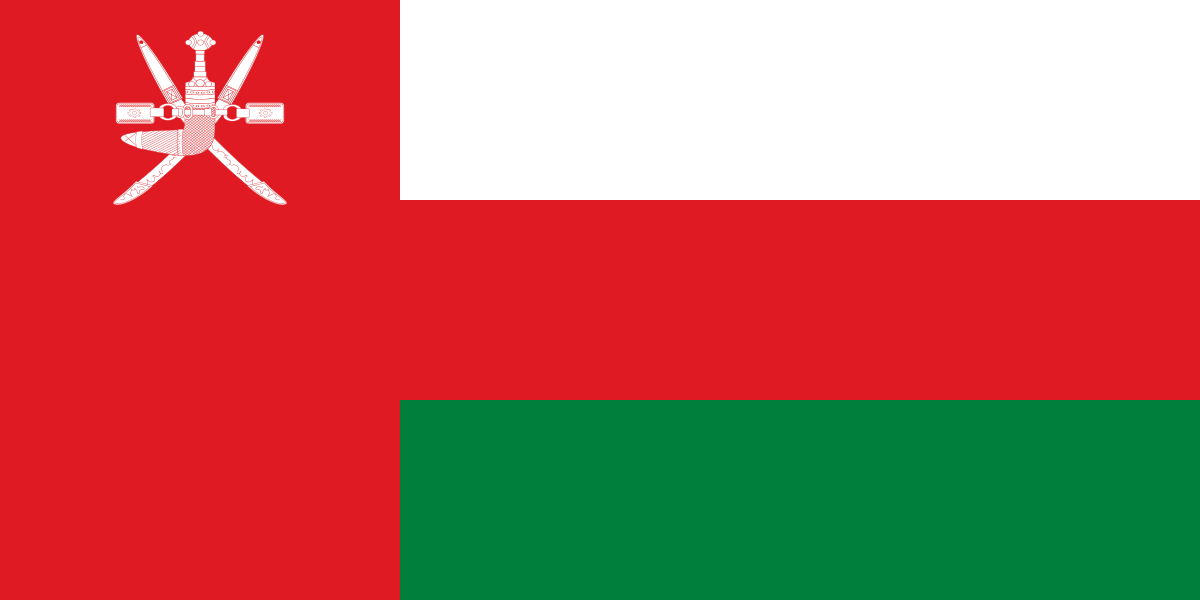
🏛️ Capital
Muscat
👥 Population
5,343,630
📐 Area
309,500 km²
💱 Currency
Omani rial (ر.ع.)
🗣️ Languages
Arabic
📞 Calling Code
+968
🕐 Time Zones
UTC+04:00
🌐 Region
Asia / Western Asia
About Oman
Oman is the Arabian Peninsula's best-kept secret — a country of breathtaking natural beauty, warm traditional hospitality, and a depth of history that most visitors never suspect when they first arrive. While neighbouring Gulf states have built their identities around modern skylines and luxury retail, Oman has charted a different course: preserving its ancient forts, mountain villages, and desert traditions while modernising thoughtfully and sustainably. The result is an authenticity that is increasingly rare in the region and deeply rewarding for the curious traveller.
The geography of Oman is one of the most varied in the Arab world. The dramatic Hajar Mountains rise sharply from the coast, their ancient terraced villages and dramatic canyon roads offering some of the finest driving and hiking in the region. Wadi Shab, a gorge of deep turquoise pools accessible only by a short boat crossing, is one of the Arabian Peninsula's most spectacular natural swimming spots. The Wahiba Sands — an ocean of red and orange dunes rolling to the horizon — offers classic desert camping and camel encounters, while the southern province of Dhofar, transformed each monsoon season into a lush green landscape unlike anywhere else in Arabia, draws visitors with its frankincense groves and ancient trading history.
Muscat, the capital, is a city of low white buildings spread beneath ochre mountains, with a magnificent waterfront corniche, the Sultan Qaboos Grand Mosque — one of the most beautiful in the world — and a souk culture centred on frankincense, silver jewellery, and the distinctive curved khanjar daggers that are a symbol of Omani identity. The legacy of Sultan Qaboos, who led a peaceful renaissance of the country from 1970 to 2020, is visible everywhere — in the hospitals, roads, schools, and cultural institutions that transformed one of the world's poorest countries into a stable, educated, and proud modern state.
The geography of Oman is one of the most varied in the Arab world. The dramatic Hajar Mountains rise sharply from the coast, their ancient terraced villages and dramatic canyon roads offering some of the finest driving and hiking in the region. Wadi Shab, a gorge of deep turquoise pools accessible only by a short boat crossing, is one of the Arabian Peninsula's most spectacular natural swimming spots. The Wahiba Sands — an ocean of red and orange dunes rolling to the horizon — offers classic desert camping and camel encounters, while the southern province of Dhofar, transformed each monsoon season into a lush green landscape unlike anywhere else in Arabia, draws visitors with its frankincense groves and ancient trading history.
Muscat, the capital, is a city of low white buildings spread beneath ochre mountains, with a magnificent waterfront corniche, the Sultan Qaboos Grand Mosque — one of the most beautiful in the world — and a souk culture centred on frankincense, silver jewellery, and the distinctive curved khanjar daggers that are a symbol of Omani identity. The legacy of Sultan Qaboos, who led a peaceful renaissance of the country from 1970 to 2020, is visible everywhere — in the hospitals, roads, schools, and cultural institutions that transformed one of the world's poorest countries into a stable, educated, and proud modern state.
History & Background
Oman has been inhabited for at least ten thousand years and was a centre of frankincense production and trade for much of recorded history. The ancient land of Magan — corresponding to modern Oman — supplied copper and diorite to Mesopotamia by 3000 BC, and the Dhofar region was the heart of the legendary "Land of Frankincense," supplying the precious resin to the ancient civilisations of Egypt, Rome, and the Arabian Peninsula. Falaj irrigation systems, some dating back more than three thousand years, still channel mountain water to Omani farms today — a feat of ancient hydraulic engineering recognised by UNESCO.
The arrival of Islam in the seventh century AD brought Oman into the wider Islamic world, and the country soon developed the distinctive Ibadi school of Islam — neither Sunni nor Shia, but following a third tradition rooted in early Islamic theology and emphasising justice, modesty, and good governance. The Omani maritime empire at its peak in the nineteenth century included Zanzibar, parts of coastal Kenya, the Malabar Coast of India, and the approaches to the Persian Gulf, making Muscat one of the Indian Ocean's great trading powers. When Sultan Qaboos bin Said came to power in 1970, he found a country with only three hospitals, a handful of schools, and minimal infrastructure. In fifty years, he built a modern state without sacrificing the cultural soul that makes Oman extraordinary.
The arrival of Islam in the seventh century AD brought Oman into the wider Islamic world, and the country soon developed the distinctive Ibadi school of Islam — neither Sunni nor Shia, but following a third tradition rooted in early Islamic theology and emphasising justice, modesty, and good governance. The Omani maritime empire at its peak in the nineteenth century included Zanzibar, parts of coastal Kenya, the Malabar Coast of India, and the approaches to the Persian Gulf, making Muscat one of the Indian Ocean's great trading powers. When Sultan Qaboos bin Said came to power in 1970, he found a country with only three hospitals, a handful of schools, and minimal infrastructure. In fifty years, he built a modern state without sacrificing the cultural soul that makes Oman extraordinary.
Culture & People
Omani culture is one of the most genuinely hospitable in the world — a culture in which welcoming a stranger is not merely a social nicety but a moral obligation rooted in Islamic faith and centuries of trading tradition. You will be offered Omani coffee (qahwa) — flavoured with cardamom and saffron — and dates almost everywhere you go, from a government office to a roadside fuel station. Dress and behaviour are conservative by regional standards; Omanis take quiet pride in their traditions and expect visitors to engage respectfully. The khanjar dagger worn on the ceremonial dress of Omani men is a symbol of honour, courage, and national identity.
Oman's cultural heritage spans three thousand years of seafaring, trade, and empire. At its height in the eighteenth and nineteenth centuries, the Omani Empire controlled the coastline of East Africa including Zanzibar and the island ports of the Persian Gulf and Indian Ocean, making Muscat one of the most cosmopolitan trading cities of the pre-modern world. This maritime heritage has produced a rich tradition of dhow building, navigational knowledge, and a cuisine and culture that blends Arab, Persian, East African, and Indian influences in ways that are uniquely Omani. Traditional arts — weaving, silversmithing, and the poetry of tribal storytelling — are actively maintained and taught to new generations.
Oman's cultural heritage spans three thousand years of seafaring, trade, and empire. At its height in the eighteenth and nineteenth centuries, the Omani Empire controlled the coastline of East Africa including Zanzibar and the island ports of the Persian Gulf and Indian Ocean, making Muscat one of the most cosmopolitan trading cities of the pre-modern world. This maritime heritage has produced a rich tradition of dhow building, navigational knowledge, and a cuisine and culture that blends Arab, Persian, East African, and Indian influences in ways that are uniquely Omani. Traditional arts — weaving, silversmithing, and the poetry of tribal storytelling — are actively maintained and taught to new generations.
Food & Cuisine
Omani cuisine reflects the country's position at the crossroads of the Arab, Indian, Persian, and East African culinary worlds — a rich, spiced cooking tradition that is subtly different from the food of neighbouring Gulf states and deeply tied to the frankincense trade that defined Oman's historical identity. Shuwa is the most iconic Omani dish: whole lamb marinated for two days in spices, wrapped in banana leaves, and slow-cooked overnight in an underground sand oven, producing meat of extraordinary tenderness typically served on feast days and Eid celebrations. Majboos — fragrant rice cooked with meat, dried limes, and spices — is the everyday celebration dish equivalent to the Gulf biryani, eaten at Friday family lunches across the country.
Mashakik — spiced meat skewers grilled over charcoal and eaten with flatbread, raw onion, and tomato — are a popular street food alongside halwa, Oman's distinctive gelatinous sweet made with rosewater, saffron, and almonds that is the essential accompaniment to qahwa coffee. Muscat's restaurant scene has grown rapidly, with excellent Indian and Pakistani restaurants reflecting the large South Asian population, Lebanese grills, and a growing number of chefs working with traditional Omani ingredients in contemporary presentations. Seafood is outstanding: grilled hamour (grouper) with lemon and Omani spices, lobster from the Musandam peninsula, and shark along the Dhofar coast are all worth seeking out.
Mashakik — spiced meat skewers grilled over charcoal and eaten with flatbread, raw onion, and tomato — are a popular street food alongside halwa, Oman's distinctive gelatinous sweet made with rosewater, saffron, and almonds that is the essential accompaniment to qahwa coffee. Muscat's restaurant scene has grown rapidly, with excellent Indian and Pakistani restaurants reflecting the large South Asian population, Lebanese grills, and a growing number of chefs working with traditional Omani ingredients in contemporary presentations. Seafood is outstanding: grilled hamour (grouper) with lemon and Omani spices, lobster from the Musandam peninsula, and shark along the Dhofar coast are all worth seeking out.
Top Attractions
- Sultan Qaboos Grand Mosque, Muscat — One of the world's most magnificent mosques, open to non-Muslim visitors in the morning; the main prayer hall houses the world's largest hand-woven carpet and a spectacular crystal chandelier.
- Wadi Shab — A breathtaking gorge of turquoise pools, waterfalls, and towering limestone walls reached by a short boat crossing, with a hidden cave swimming hole at its innermost point.
- Wahiba Sands (Sharqiyah Sands) — An ocean of red and golden dunes offering camel riding, dune bashing, Bedouin camp nights, and some of the most spectacular stargazing in Arabia.
- Nizwa Fort and Souk — The historic capital of Oman's interior, with a massive circular tower fort and a traditional souk famous for silver jewellery, khanjars, and Friday morning goat and cattle markets.
- Jebel Akhdar (Green Mountain) — A dramatically scenic plateau in the Western Hajar at 2,000 metres altitude, famous for rose water, pomegranates, terraced villages, and dramatic canyon rim walks.
- Ras al-Jinz Turtle Reserve — A protected beach where thousands of endangered green turtles nest annually; nocturnal guided visits offer a humbling encounter with one of nature's great dramas.
Practical Travel Tips
- Dress modestly outside of hotel pools and beaches — covering shoulders and knees is appropriate and respectful in cities, souks, and religious sites.
- Oman is a conservative country — public displays of affection are inappropriate, and alcohol is only available in licensed hotel bars and restaurants.
- A 4WD rental is highly recommended for exploring wadis, the Hajar Mountains, and desert areas; many of the best attractions are reached via off-road tracks.
- Renting a car and self-driving is easy and rewarding — roads are well-maintained and signposted in Arabic and English, and traffic is generally orderly.
- Carry cash in Omani rials for smaller establishments and rural areas; international cards are widely accepted in cities and hotels.
- Photography of government buildings, military installations, and people without permission is prohibited — always ask before photographing individuals.
- The Omani Rial is one of the world's highest-valued currencies — Oman is generally more affordable than its Gulf neighbours but international hotel rates are still significant.
Visa Overview
Oman has significantly expanded its visa-free access in recent years. Citizens of many countries — including the UK, EU member states, the USA, Canada, Australia, Japan, and most GCC nations — can obtain a visa on arrival or an e-visa online before departure, valid for up to 30 days and extendable. The online e-visa portal on the Royal Oman Police website is the simplest option and can be processed within 24 to 48 hours. Citizens of some nationalities must obtain a visa through an Omani embassy before travel — always verify the current list before booking your flights.
Getting Around
Muscat International Airport is the main hub, with connections to major cities in Europe, Asia, and Africa via Oman Air and international carriers. A second international airport at Salalah serves the southern region. Within Oman, renting a car is by far the best option — roads are excellent and the country's landscape rewards an unhurried road trip. Public buses (Mwasalat) connect major cities cheaply. Taxis are metered in Muscat but agree on a price before departure elsewhere. Shared taxis and microbuses serve inter-city routes at very low fares but run on no fixed schedule.
Safety Notes
Oman is one of the safest countries in the Middle East and globally, with extremely low crime rates and a strong culture of hospitality toward visitors. The main risks are environmental: desert heat can be extreme from May to September outside Dhofar, requiring ample water and sun protection. Flash floods in wadis can occur with no warning during rain — never enter a wadi during or after a storm. Driving on off-road tracks requires experience and a well-equipped 4WD. Check your government's travel advisory before visiting border regions near Yemen.
Live Exchange Rates
Current exchange rates for currencies used in Oman.
Omani rial (OMR) ر.ع.
Updated: 2026-10-05
Omani rial (OMR) ر.ع.
Updated: 2026-10-05
| Currency Code | Rate |
|---|---|
| 1INCH | 24.903979 |
| AAVE | 0.014395 |
| ADA | 9.744213 |
| AED | 9.544388 |
| AFN | 167.607683 |
| AKT | 3.280549 |
| ALGO | 19.845725 |
| ALL | 212.475716 |
| AMD | 941.461040 |
| AMP | 4,107.514527 |
| ANG | 4.679346 |
| AOA | 2,384.698284 |
| APE | 15.491437 |
| APT | 3.287972 |
| AR | 0.580794 |
| ARB | 12.927033 |
| ARS | 3,982.052226 |
| ATOM | 1.492259 |
| ATS | 31.976875 |
| AUD | 3.746125 |
| AVAX | 0.238601 |
| AWG | 4.651996 |
| AXS | 1.984069 |
| AZM | 22,090.853131 |
| AZN | 4.418171 |
| BAKE | 10,822.193343 |
| BAM | 4.545056 |
| BAT | 25.302874 |
| BBD | 5.197760 |
| BCH | 0.008163 |
| BDT | 319.586140 |
| BEF | 93.743883 |
| BGN | 4.545056 |
| BHD | 0.977179 |
| BIF | 7,832.760074 |
| BMD | 2.598880 |
| BNB | 0.003289 |
| BND | 3.331451 |
| BOB | 31.126511 |
| BRL | 13.568648 |
| BSD | 2.598880 |
| BSV | 0.130008 |
| BSW | 6,256.262077 |
| BTC | 0.000030 |
| BTCB | 36.670315 |
| BTG | 3.928399 |
| BTN | 250.645062 |
| BTT | 6,940,035.109922 |
| BUSD | 2.592815 |
| BWP | 35.894144 |
| BYN | 7.811083 |
| BYR | 50,865.473978 |
| BZD | 5.230737 |
| CAD | 3.712433 |
| CAKE | 1.040519 |
| CDF | 6,007.304266 |
| CELO | 24.713615 |
| CFX | 48.195820 |
| CHF | 2.157164 |
| CHZ | 155.496612 |
| CLP | 2,546.488066 |
| CNH | 17.440408 |
| CNY | 17.425819 |
| COMP | 0.103669 |
| COP | 8,525.354634 |
| CRC | 1,190.539370 |
| CRO | 38.065170 |
| CRV | 6.786379 |
| CSPR | 1,008.160546 |
| CUC | 2.595178 |
| CUP | 62.235689 |
| CVE | 256.250957 |
| CVX | 1.115770 |
| CYP | 1.360089 |
| CZK | 56.765653 |
| DAI | 2.595636 |
| DASH | 0.043639 |
| DCR | 0.141030 |
| DEM | 4.545056 |
| DFI | 3,928.322299 |
| DJF | 463.454028 |
| DKK | 17.368563 |
| DOGE | 27.274856 |
| DOP | 155.564648 |
| DOT | 2.141754 |
| DYDX | 17.954068 |
| DZD | 347.447886 |
| EEK | 36.360447 |
| EGLD | 0.581896 |
| EGP | 136.818462 |
| ENJ | 77.746042 |
| EOS | 26.951997 |
| ERN | 38.983203 |
| ESP | 386.656133 |
| ETB | 424.299244 |
| ETC | 0.289937 |
| ETH | 0.000960 |
| EUR | 2.323850 |
| EURC | 2.319556 |
| FEI | 2.595262 |
| FIL | 2.477590 |
| FIM | 13.816986 |
| FJD | 5.857556 |
| FKP | 1.967476 |
| FLOW | 82.185452 |
| FLR | 359.766370 |
| FRAX | 2.618399 |
| FRF | 15.243458 |
| FTT | 10.164619 |
| GALA | 1,047.973164 |
| GBP | 1.967476 |
| GEL | 6.745125 |
| GGP | 1.967476 |
| GHC | 304,699.290131 |
| GHS | 30.469929 |
| GIP | 1.967476 |
| GMD | 192.502594 |
| GMX | 0.309915 |
| GNF | 22,874.111076 |
| GNO | 0.021510 |
| GRD | 791.851942 |
| GRT | 86.829762 |
| GT | 0.234154 |
| GTQ | 19.859157 |
| GUSD | 2.600117 |
| GYD | 543.239265 |
| HBAR | 25.192510 |
| HKD | 20.392561 |
| HNL | 69.937645 |
| HNT | 4.523805 |
| HOT | 5,804.445637 |
| HRK | 17.509049 |
| HT | 71.967401 |
| HTG | 340.075835 |
| HUF | 856.855770 |
| ICP | 0.798486 |
| IDR | 46,627.563213 |
| IEP | 1.830181 |
| ILS | 7.931354 |
| IMP | 1.967476 |
| IMX | 14.303333 |
| INJ | 0.343657 |
| INR | 250.645062 |
| IQD | 3,402.556376 |
| IRR | 4,532,579.561038 |
| ISK | 318.801663 |
| ITL | 4,499.601352 |
| JEP | 1.967476 |
| JMD | 411.100414 |
| JOD | 1.842606 |
| JPY | 410.818997 |
| KAS | 60.857475 |
| KAVA | 37.731242 |
| KCS | 0.346800 |
| KDA | 279.679855 |
| KES | 334.713150 |
| KGS | 227.285594 |
| KHR | 10,536.706707 |
| KLAY | 68.919035 |
| KMF | 1,143.259335 |
| KNC | 18.466124 |
| KPW | 2,335.660344 |
| KRW | 3,499.595647 |
| KSM | 0.504218 |
| KWD | 0.802811 |
| KYD | 2.156528 |
| KZT | 1,165.599452 |
| LAK | 58,575.416479 |
| LBP | 232,979.889719 |
| LDO | 5.573771 |
| LEO | 0.290924 |
| LINK | 0.184394 |
| LKR | 858.886362 |
| LRC | 246.984493 |
| LRD | 446.291176 |
| LSL | 43.490833 |
| LTC | 0.037111 |
| LTL | 8.023790 |
| LUF | 93.743883 |
| LUNA | 51.214513 |
| LUNC | 49,413.713100 |
| LVL | 1.633202 |
| LYD | 16.631730 |
| MAD | 25.622099 |
| MANA | 25.582951 |
| MBX | 87.327795 |
| MDL | 46.399946 |
| MGA | 11,581.444359 |
| MGF | 57,907.221797 |
| MINA | 16.233318 |
| MKD | 142.324267 |
| MKR | 0.001180 |
| MMK | 5,455.665773 |
| MNT | 9,353.901264 |
| MOP | 21.004338 |
| MRO | 1,043.720866 |
| MRU | 104.372087 |
| MTL | 0.997629 |
| MUR | 125.908637 |
| MVR | 40.177487 |
| MWK | 4,503.208294 |
| MXN | 47.373327 |
| MXV | 5.376025 |
| MYR | 10.624271 |
| MZM | 165,893.347047 |
| MZN | 165.893347 |
| NAD | 43.490833 |
| NEAR | 0.532921 |
| NEO | 1.020723 |
| NEXO | 3.021966 |
| NFT | 10,812,133.311046 |
| NGN | 3,449.027343 |
| NIO | 95.485737 |
| NLG | 5.121092 |
| NOK | 25.115983 |
| NPR | 401.220083 |
| NZD | 4.648732 |
| OKB | 0.020845 |
| ONE | 17.777230 |
| OP | 19.842315 |
| ORDI | 0.575830 |
| PAB | 2.598880 |
| PAXG | 0.000627 |
| PEN | 8.993403 |
| PEPE | 591,864.370371 |
| PGK | 11.673865 |
| PHP | 163.058417 |
| PI | 29.918964 |
| PKR | 719.613000 |
| PLN | 10.196589 |
| POL | 23.937288 |
| PTE | 465.890128 |
| PYG | 15,173.605849 |
| QAR | 9.459924 |
| QNT | 0.010421 |
| QTUM | 2.646143 |
| ROL | 124,191.992414 |
| RON | 12.419199 |
| RPL | 1.361867 |
| RSD | 271.532414 |
| RUB | 217.942517 |
| RUNE | 3.325926 |
| RVN | 1,089.712636 |
| RWF | 3,838.966965 |
| SAND | 35.600713 |
| SAR | 9.745801 |
| SBD | 20.969650 |
| SCR | 37.054796 |
| SDD | 155,997.690762 |
| SDG | 1,559.976908 |
| SEK | 26.210128 |
| SGD | 3.331451 |
| SHIB | 440,331.831768 |
| SHP | 1.967476 |
| SIT | 556.887453 |
| SKK | 70.008310 |
| SLE | 59.891446 |
| SLL | 59,891.446023 |
| SNX | 10.334947 |
| SOL | 0.021539 |
| SOS | 1,481.045759 |
| SPL | 0.433147 |
| SRD | 98.278920 |
| SRG | 98,278.920444 |
| SSP | 14,846.341068 |
| STD | 57,422.553203 |
| STN | 57.422553 |
| STX | 6.585652 |
| SUI | 2.134032 |
| SVC | 22.740202 |
| SYP | 33,742.495183 |
| SZL | 43.490833 |
| THB | 87.551940 |
| THETA | 11.476666 |
| TJS | 23.929771 |
| TMM | 45,480.236984 |
| TMT | 9.096047 |
| TND | 7.771359 |
| TOP | 6.245349 |
| TRL | 127,759,920.186276 |
| TRX | 7.746066 |
| TRY | 127.759920 |
| TTD | 17.610961 |
| TUSD | 2.596213 |
| TVD | 3.746125 |
| TWD | 82.652575 |
| TWT | 4.574844 |
| TZS | 6,839.882999 |
| UAH | 116.877560 |
| UGX | 10,365.669917 |
| UNI | 0.288519 |
| USD | 2.598880 |
| USDC | 2.595367 |
| USDD | 2.596486 |
| USDP | 2.600203 |
| USDT | 2.596011 |
| UYU | 104.669108 |
| UZS | 30,607.196545 |
| VAL | 4,499.601352 |
| VEB | 225,348,407,394.2890 |
| VED | 2,253.484074 |
| VEF | 225,348,407.394289 |
| VES | 2,253.484074 |
| VET | 298.986712 |
| VND | 67,607.042699 |
| VUV | 313.005065 |
| WAVES | 8.637954 |
| WEMIX | 13.303390 |
| WOO | 192.695340 |
| WST | 7.209753 |
| XAF | 1,524.345780 |
| XAG | 0.042676 |
| XAU | 0.000629 |
| XAUT | 0.000628 |
| XBT | 0.000030 |
| XCD | 7.033604 |
| XCG | 4.679346 |
| XCH | 1.650209 |
| XDC | 78.994147 |
| XDR | 1.919373 |
| XEC | 319,905.923432 |
| XEM | 4,545.417987 |
| XLM | 11.664313 |
| XMR | 0.004825 |
| XOF | 1,524.345780 |
| XPD | 0.002222 |
| XPF | 277.309088 |
| XPT | 0.001521 |
| XRP | 1.725838 |
| XTZ | 7.912352 |
| YER | 614.355985 |
| ZAR | 43.490833 |
| ZEC | 0.001973 |
| ZIL | 725.243333 |
| ZMK | 51,040.244172 |
| ZMW | 51.040244 |
| ZWD | 940.534750 |
| ZWG | 69.562575 |
| ZWL | 173,817.689447 |
No currencies match your search.
Cities in Oman 230
Browse all cities and towns
Cities in Oman 230
Browse all cities and towns
'Ibri
‘Uwaynat al Murrah
Ad Dashshah
Al `Arja'
Al Banah
Al Bidi
Al Buday‘ah
Al Hajar
Al Harim
Al Harmali
Al Hiyal
Al Juwaif
Al Juwayn
Al khuwair
Al Mandil
Al Qafsah
Al Qaryah
al-Buraymi
al-Khaburah
al-Masna'ah
al-Mudaybi
Ar Rawḑah
ar-Rustaq
As Sa‘af
As Sabghah
As Sumayni
as-Sib
as-Suwayq
Ash Sharm
Ash Shiyah
Ash Shuwayhah
Az Zahir
Az̧ Z̧ahrah
Azaiba
Bahla'
Barkah
Bawshar
Bayl
Dar al Bayda'
Dar al Qil
Dayqarah
Falaj al Majaji`ah
Far‘
Fulayj
Fulayj al Mashayikh
Hajar Bani Hamid حجر بني حميد
Harat al Hawatim
Harat az Zaharah
Hayl Kalabi
Hazm Qāshi‘
Ibra
Jafr an Nudūd
Janah
Khasab
Kubarah
Luhsayyah
Madinat Qabus
Majhal
Majzi
Masqat
Matrah
Misfāt al Haţāţilah
Musabihiyah
Muscat
Muţayd
Muttrah
Nizwa
Qurayyat
Qurm
Rayy
Rusayl
Ruwi
Saham
Salalah
Sayḥ Ẓahar al Khārij
Shakhbūţ
Shinas
Shiyah
Shūh
Sidr al Ḩawājir
Sitāl
Suhar
Sumayl
Şunaybi‘
Sur
Suri
Thaqib
Wadi Al Kabir
Zahrat as Salam
Zikt
أبو بقرة
أدم
أسود
إبراء
إزكي
الأنصب
البداية
البريمي
الثرمد
الجادي
الجراديّة
الجفنين
الحائمة
الحاجر
الحارة
الحرف
الحمراء
الحمرية
الحويلات
الحيل الشمالية
الخابورة
الخوض
الخوير
الدقم
الرستاق
الرسيل
الروضة
السّنادل
السنينة
السويق
السّيح
السيق
الشرية
الشعبية
الشويمية
الصّباخ
الصويحرة
العامرات
العقر
الغبرة الجنوبية
الغبرة الشمالية
الغونة
الفليج
القرم
القطّارة
الكامل و الوافي
الكحل
المزيونة
المصنعة
المضيبي
المعبيلة الجنوبية
الملدة
الموالح الجنوبية
الموالح الشمالية
الوادي الكبير
الوديات
الوطية
بخا
بدبد
بدية
بركاء
بلاد بني بو علي
بهلاء
بوشر
بويدر
بيت الفلج
ثمريت
حجر بني حميد
حفيت
حفيت
حلف
حي العرفان
خصب
خضراوين
دارسيت
دبا
رأس الحد
روضة
روي
زغي
سداب
سمائل
سمد الشأن
سناو
سوق السيب
سيما
شار الدّار
شعاب السّحار
شليم
شناص
صحار
صحم
صلالة
صور
ضنك
طاقة
طوي بنت راشد
ظهير سيح الظّاهر
عبري
عز
عصي
غضفان
غلا
غلّان الغزار
غمضاء
فرق
فزح
فلج الشام
فلج القبائل
فنجاء
قدى
قريات
كحل
كمزار
لزق
لوى
ليماء
مجيس
محضة
مدحاء
مدينة الحق
مدينة السلطان قابوس
مدينة الطيب
مرباط
مرتفعات القرم
مرتفعات المطار
مسقط
مشيحطان
مطرح
معمورة
منح
ميتن
نخل
نزوى
هرويب
هيماء
وادي المعاول
ولاية العوابي
يتي
ينقل
Visa Requirements
Check what visa a citizen of Oman needs to enter any country.
Frequently Asked Questions
What is the capital of Oman?
The capital of Oman is Muscat.
What currency does Oman use?
Oman uses the Omani rial (ر.ع.) as its official currency.
What language is spoken in Oman?
The official language(s) of Oman include Arabic.
What is the population of Oman?
Oman has a population of approximately 5,343,630 people.
What region is Oman in?
Oman is located in Asia, specifically in the Western Asia subregion.
What is the international calling code for Oman?
The international dialing code for Oman is +968.
What time zones does Oman observe?
Oman observes the following time zone(s): UTC+04:00.
What is the current time in Oman?
The local time in Oman is currently --:--. This time applies to the primary time zone.
What is the total area of Oman?
Oman covers a total area of 309,500 km².
How many states or provinces does Oman have?
Oman is divided into 18 states or provinces.
What are the public holidays in Oman in 2026?
You can view the complete list of public holidays for Oman in 2026 on the Holidays 2026 page.
What are the visa requirements for citizens of Oman?
Visa requirements for citizens of Oman vary by destination. Use our Visa Requirements Checker below to look up requirements for any destination country.