
Africa · Eastern Africa
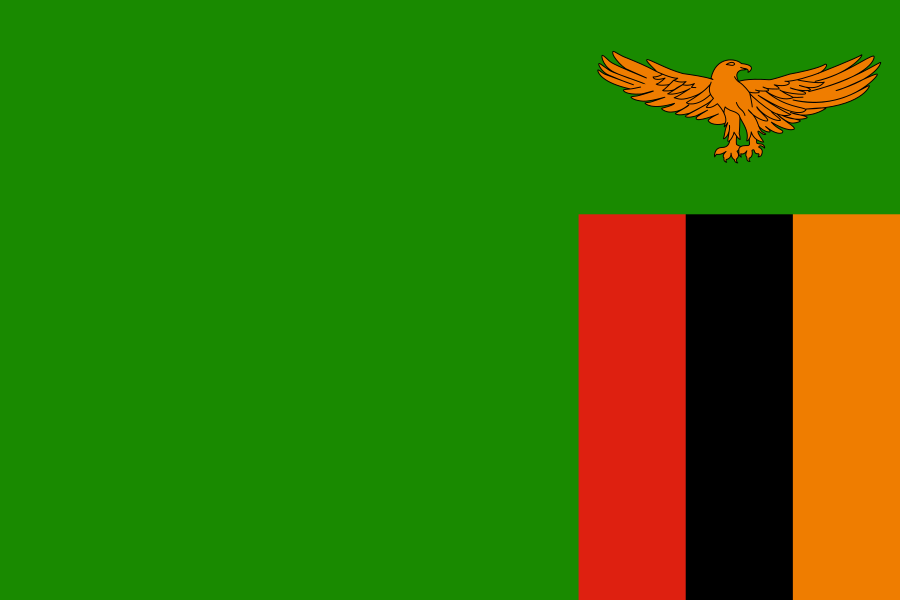
Zambia
Republic of Zambia
🏛️ Capital
Lusaka
👥 Population
19,693,423
📐 Area
752,612 km²
💱 Currency
Zambian kwacha (ZK)
🗣️ Languages
English
📞 Calling Code
+260
🕐 Time Zones
UTC+02:00
🌐 Region
Africa / Eastern Africa
About Zambia
Zambia is Africa at its most raw, generous, and genuinely wild. Landlocked in the heart of the continent, this vast nation of 752,000 square kilometres hosts some of the greatest concentrations of wildlife on Earth, a river system of breathtaking scale and power, and a safari culture that prioritises depth and authenticity over the tick-box game drives that have commodified wildlife tourism elsewhere on the continent. When you arrive in Zambia, you are not visiting a theme park — you are entering a living ecosystem that operates on its own ancient rhythms, indifferent to your timetable and all the more thrilling for it.
Victoria Falls, shared with Zimbabwe on the Zambezi River, is Zambia's most famous landmark and one of the world's most spectacular natural phenomena. Known to the local Kololo people as Mosi-oa-Tunya — "The Smoke That Thunders" — the falls stretch 1.7 kilometres wide and plunge up to 108 metres into a chasm of perpetual spray and sound. But to reduce Zambia to its famous waterfall would be to miss the country's deepest gifts. The South Luangwa National Park, where the tradition of the walking safari was invented by legendary guide Norman Carr in the 1950s, offers an intimate, on-foot encounter with leopards, elephants, hippos, and an extraordinary bird diversity that no vehicle-based safari can replicate. The Lower Zambezi National Park and Kafue — Africa's second-largest national park — add further dimensions of wilderness that reward the traveller willing to venture beyond the standard circuit.
Zambia is also a country of remarkable warmth and hospitality. The Zambian people's openness to visitors, their genuine pride in their country's natural wealth, and the understated, non-commercialised character of the tourism experience here combine to create a destination that stays with you long after you have returned home. This is Africa for those who want to experience it honestly.
Victoria Falls, shared with Zimbabwe on the Zambezi River, is Zambia's most famous landmark and one of the world's most spectacular natural phenomena. Known to the local Kololo people as Mosi-oa-Tunya — "The Smoke That Thunders" — the falls stretch 1.7 kilometres wide and plunge up to 108 metres into a chasm of perpetual spray and sound. But to reduce Zambia to its famous waterfall would be to miss the country's deepest gifts. The South Luangwa National Park, where the tradition of the walking safari was invented by legendary guide Norman Carr in the 1950s, offers an intimate, on-foot encounter with leopards, elephants, hippos, and an extraordinary bird diversity that no vehicle-based safari can replicate. The Lower Zambezi National Park and Kafue — Africa's second-largest national park — add further dimensions of wilderness that reward the traveller willing to venture beyond the standard circuit.
Zambia is also a country of remarkable warmth and hospitality. The Zambian people's openness to visitors, their genuine pride in their country's natural wealth, and the understated, non-commercialised character of the tourism experience here combine to create a destination that stays with you long after you have returned home. This is Africa for those who want to experience it honestly.
History & Background
Zambia's pre-colonial history is written in the movements of its many peoples across the great river valleys and plateaus of Central Africa. The Tonga people along the Zambezi, the Bemba of the Copper Belt highlands, and numerous other groups established sophisticated agricultural and trading societies long before European contact. The explorer-missionary David Livingstone arrived in the region in the 1850s and became the first European to see Victoria Falls in 1855, naming them after Queen Victoria and triggering a wave of European interest that would eventually lead to British South Africa Company control and formal incorporation into British Central Africa. The territory was renamed Northern Rhodesia in 1911 and administered as a British protectorate until independence.
The discovery of vast copper deposits in what became known as the Copper Belt drove a colonial economic development that was deeply exploitative — copper wealth flowed out while Zambian workers endured harsh conditions in the mines. The independence movement, led by Kenneth Kaunda and the United National Independence Party (UNIP), achieved peaceful self-governance on 24 October 1964. Zambia adopted a one-party state system under Kaunda from 1972 to 1991, a period of ideological consistency but economic decline linked to falling copper prices. The peaceful transition to multi-party democracy in 1991, when Kaunda conceded defeat to Frederick Chiluba in a free election, was celebrated across Africa as a model for democratic transition on a continent where such transfers of power were still rare.
The discovery of vast copper deposits in what became known as the Copper Belt drove a colonial economic development that was deeply exploitative — copper wealth flowed out while Zambian workers endured harsh conditions in the mines. The independence movement, led by Kenneth Kaunda and the United National Independence Party (UNIP), achieved peaceful self-governance on 24 October 1964. Zambia adopted a one-party state system under Kaunda from 1972 to 1991, a period of ideological consistency but economic decline linked to falling copper prices. The peaceful transition to multi-party democracy in 1991, when Kaunda conceded defeat to Frederick Chiluba in a free election, was celebrated across Africa as a model for democratic transition on a continent where such transfers of power were still rare.
Culture & People
Zambia is home to over seventy distinct ethnic groups, making it one of Africa's most culturally diverse nations. The major groups include the Bemba in the north, the Tonga in the south, the Ngoni in the east, and the Lozi in the west — each with distinct languages, musical traditions, ceremonies, and relationships to the land. Despite this diversity, Zambia has maintained remarkable social cohesion and political stability since independence in 1964, earning a reputation as one of Africa's most peaceful and tolerant nations. The motto "One Zambia, One Nation" is not merely a slogan but reflects a genuine national identity built consciously across tribal divisions.
Traditional ceremonies remain vibrant and central to Zambian cultural life. The Kuomboka ceremony of the Lozi people — in which the Litunga (king) and his court travel by royal barge from their flooded floodplain capital to higher ground each year — is one of Africa's most spectacular and authentic royal ceremonies, drawing thousands of participants and spectators. The Nc'wala of the Ngoni people, celebrating the first fruits harvest in February, and the Likumbi Lya Mize of the Luvale people are equally significant cultural events. Music and dance are central to all these traditions — Zambian folk music, particularly the Kalindula guitar style that emerged in the 1970s and 1980s, blends traditional rhythms with electric guitar in ways that influenced pan-African popular music.
Traditional ceremonies remain vibrant and central to Zambian cultural life. The Kuomboka ceremony of the Lozi people — in which the Litunga (king) and his court travel by royal barge from their flooded floodplain capital to higher ground each year — is one of Africa's most spectacular and authentic royal ceremonies, drawing thousands of participants and spectators. The Nc'wala of the Ngoni people, celebrating the first fruits harvest in February, and the Likumbi Lya Mize of the Luvale people are equally significant cultural events. Music and dance are central to all these traditions — Zambian folk music, particularly the Kalindula guitar style that emerged in the 1970s and 1980s, blends traditional rhythms with electric guitar in ways that influenced pan-African popular music.
Food & Cuisine
Zambian cuisine is hearty, nourishing, and rooted in the agricultural traditions of its many regional cultures. The foundation of virtually every Zambian meal is nshima — a stiff porridge made from finely ground white maize that is shaped by hand into balls and used to scoop up accompanying stews, relishes, and vegetables. Nshima is not merely food but a cultural touchstone; eating it properly with your hands, at a communal table, is both a social act and a connection to Zambian identity. Accompany your nshima with kalembula (sweet potato leaves), ifisashi (peanut and vegetable relish), or a rich bean stew, and you have the essential Zambian meal.
Freshwater fish from the Zambezi, Lake Kariba, and the Kafue River system are central to the diet, particularly kapenta — tiny sardine-like fish that are sun-dried and eaten whole, fried with tomatoes and onions, or added to relishes. Bream is the prized freshwater catch, grilled whole over charcoal and served with nshima and vegetables at lakeside restaurants. Bush meat, including game animals like impala and warthog, appears in both traditional rural contexts and on the menus of upmarket safari lodges where it is prepared with considerable sophistication. In Lusaka, a growing restaurant scene offers everything from wood-fired pizza to excellent Indian and Chinese cuisine, reflecting the capital's cosmopolitan character. Local Mosi Lager — named for the Zambian name for Victoria Falls — is the ubiquitous cold beer that accompanies sunset views across the Zambezi.
Freshwater fish from the Zambezi, Lake Kariba, and the Kafue River system are central to the diet, particularly kapenta — tiny sardine-like fish that are sun-dried and eaten whole, fried with tomatoes and onions, or added to relishes. Bream is the prized freshwater catch, grilled whole over charcoal and served with nshima and vegetables at lakeside restaurants. Bush meat, including game animals like impala and warthog, appears in both traditional rural contexts and on the menus of upmarket safari lodges where it is prepared with considerable sophistication. In Lusaka, a growing restaurant scene offers everything from wood-fired pizza to excellent Indian and Chinese cuisine, reflecting the capital's cosmopolitan character. Local Mosi Lager — named for the Zambian name for Victoria Falls — is the ubiquitous cold beer that accompanies sunset views across the Zambezi.
Top Attractions
- Victoria Falls (Mosi-oa-Tunya) — One of the Seven Natural Wonders of the World and a UNESCO World Heritage Site, where the Zambezi River plunges 108 metres into a 1.7km-wide chasm of thunder, spray, and permanent rainbows.
- South Luangwa National Park — The birthplace of the walking safari and home to exceptional densities of leopards, elephants, hippos, Thornicroft's giraffe, and over 400 bird species in a magnificent river valley setting.
- Lower Zambezi National Park — A pristine wilderness of riverine forests, oxbow lagoons, and floodplains along the Zambezi, offering canoe safaris, fishing for tiger fish, and game drives of extraordinary quality.
- Kafue National Park — Africa's second-largest national park, largely undiscovered by mass tourism, offering vast Busanga Plains famous for wild dog, cheetah, and Kafue lechwe antelope in magnificent remoteness.
- Lake Tanganyika, Mpulungu — The world's second deepest lake and Africa's longest, offering crystal-clear freshwater snorkelling among hundreds of endemic cichlid fish species in a setting of dramatic lakeside escarpments.
Practical Travel Tips
- Obtain a KAZA UniVisa if visiting both Zambia and Zimbabwe — this single visa (US$50) provides multiple entries to both countries and is available at major border posts and Livingstone Airport.
- Book walking safari experiences well in advance — the best guides and camps in South Luangwa fill up months ahead for the peak dry season, and this is genuinely one of Africa's most remarkable wildlife experiences.
- Carry US dollars in cash for tips, smaller lodges, and market purchases — most safari camps price in USD and many rural ATMs are unreliable outside Lusaka and Livingstone.
- Yellow fever vaccination is required for entry if arriving from certain countries; malaria prophylaxis is strongly recommended for all visitors as malaria is prevalent throughout Zambia year-round.
- Respect wildlife at all times — walking safari guides will brief you on protocol, but the key rule is never to run if you encounter dangerous animals; always stay calm and follow your guide's instructions without hesitation.
- Zambia drives on the left; road conditions vary enormously from good tarmac near cities to deeply rutted bush tracks requiring 4WD in national parks — always travel with spare tyres and fuel in remote areas.
- The Zambian people are exceptionally warm and hospitable; a greeting of "muli shani?" (how are you, in Nyanja) will be met with delight and genuine appreciation.
Visa Overview
Most nationalities require a visa to enter Zambia, available either on arrival at major entry points or in advance through Zambia's e-visa portal at evisa.zambiaimmigration.gov.zm. Single-entry visas cost approximately US$50 for most nationalities, while day-trip and double-entry options are also available. The KAZA UniVisa (US$50) is a practical option for travellers combining Zambia and Zimbabwe, allowing multiple entries to both countries within a 30-day period. Citizens of some African and Commonwealth countries may qualify for visa exemptions or reduced fees — check the Zambia Department of Immigration website for your specific nationality before travel.
Getting Around
Zambia's main international gateway is Kenneth Kaunda International Airport in Lusaka, with regional hubs at Livingstone (for Victoria Falls) and Harry Mwaanga Nkumbula International. Domestic flights operated by Proflight Zambia connect Lusaka with Livingstone, Mfuwe (South Luangwa), Kasaba Bay (Lake Tanganyika), and other bush airstrips — small aircraft bush flights are the practical way to reach remote national parks. Long-distance buses connect major towns and are affordable but slow. Self-driving is possible with a 4WD vehicle; national park access requires robust vehicles and advance camp bookings. Most safari travellers arrange transfers through their lodge.
Safety Notes
Zambia is one of Africa's safest and most stable countries, with a genuine tradition of peaceful governance and low levels of political violence. Petty theft occurs in urban areas, particularly Lusaka's markets and bus stations — take standard precautions with bags and valuables. Wildlife poses real risks in national parks; always follow your guide's instructions and never leave your camp on foot at night without an armed escort. Road accidents are the most significant safety risk for independent travellers; avoid driving after dark and check vehicle conditions thoroughly before heading into remote areas. Malaria prevention is essential.
Live Exchange Rates
Current exchange rates for currencies used in Zambia.
Zambian kwacha (ZMW) ZK
Updated: 2026-10-06
Zambian kwacha (ZMW) ZK
Updated: 2026-10-06
| Currency Code | Rate |
|---|---|
| 1INCH | 0.478448 |
| AAVE | 0.000278 |
| ADA | 0.187710 |
| AED | 0.185758 |
| AFN | 3.268088 |
| AKT | 0.066095 |
| ALGO | 0.393847 |
| ALL | 4.148850 |
| AMD | 18.298950 |
| AMP | 78.882387 |
| ANG | 0.090955 |
| AOA | 46.332648 |
| APE | 0.315704 |
| APT | 0.061608 |
| AR | 0.011221 |
| ARB | 0.248111 |
| ARS | 76.878837 |
| ATOM | 0.027781 |
| ATS | 0.620611 |
| AUD | 0.072582 |
| AVAX | 0.004455 |
| AWG | 0.090540 |
| AXS | 0.038622 |
| AZM | 429.942618 |
| AZN | 0.085989 |
| BAKE | 197.062810 |
| BAM | 0.088211 |
| BAT | 0.479517 |
| BBD | 0.101162 |
| BCH | 0.000160 |
| BDT | 6.217896 |
| BEF | 1.819392 |
| BGN | 0.088211 |
| BHD | 0.019018 |
| BIF | 151.966033 |
| BMD | 0.050581 |
| BNB | 0.000065 |
| BND | 0.064717 |
| BOB | 0.606761 |
| BRL | 0.252839 |
| BSD | 0.050581 |
| BSV | 0.002533 |
| BSW | 122.918672 |
| BTC | 0.000001 |
| BTCB | 0.723930 |
| BTG | 0.076670 |
| BTN | 4.876902 |
| BTT | 136,054.494513 |
| BUSD | 0.050572 |
| BWP | 0.696156 |
| BYN | 0.154308 |
| BYR | 991.520702 |
| BZD | 0.101723 |
| CAD | 0.072172 |
| CAKE | 0.020683 |
| CDF | 116.891999 |
| CELO | 0.486359 |
| CFX | 0.921811 |
| CHF | 0.042071 |
| CHZ | 3.023792 |
| CLP | 49.216583 |
| CNH | 0.339044 |
| CNY | 0.339153 |
| COMP | 0.002064 |
| COP | 161.789704 |
| CRC | 23.145107 |
| CRO | 0.744848 |
| CRV | 0.137207 |
| CSPR | 19.829341 |
| CUC | 0.050588 |
| CUP | 1.211603 |
| CVE | 4.973348 |
| CVX | 0.022850 |
| CYP | 0.026397 |
| CZK | 1.103363 |
| DAI | 0.050601 |
| DASH | 0.000892 |
| DCR | 0.002743 |
| DEM | 0.088211 |
| DFI | 55.343048 |
| DJF | 8.998372 |
| DKK | 0.337091 |
| DOGE | 0.533452 |
| DOP | 3.031363 |
| DOT | 0.040881 |
| DYDX | 0.346188 |
| DZD | 6.799396 |
| EEK | 0.705688 |
| EGLD | 0.011317 |
| EGP | 2.651853 |
| ENJ | 1.527898 |
| EOS | 0.497735 |
| ERN | 0.758712 |
| ESP | 7.504267 |
| ETB | 8.227568 |
| ETC | 0.005700 |
| ETH | 0.000019 |
| EUR | 0.045102 |
| EURC | 0.045095 |
| FEI | 0.050603 |
| FIL | 0.042374 |
| FIM | 0.268162 |
| FJD | 0.113812 |
| FKP | 0.038278 |
| FLOW | 1.598656 |
| FLR | 7.017211 |
| FRAX | 0.051093 |
| FRF | 0.295847 |
| FTT | 0.195805 |
| GALA | 20.876692 |
| GBP | 0.038278 |
| GEL | 0.131282 |
| GGP | 0.038278 |
| GHC | 5,946.609740 |
| GHS | 0.594661 |
| GIP | 0.038278 |
| GMD | 3.743537 |
| GMX | 0.005761 |
| GNF | 444.714845 |
| GNO | 0.000417 |
| GRD | 15.368354 |
| GRT | 1.737141 |
| GT | 0.004518 |
| GTQ | 0.386003 |
| GUSD | 0.050685 |
| GYD | 10.558712 |
| HBAR | 0.502451 |
| HKD | 0.396930 |
| HNL | 1.356265 |
| HNT | 0.097478 |
| HOT | 110.448130 |
| HRK | 0.339818 |
| HT | 1.386776 |
| HTG | 6.609492 |
| HUF | 16.568194 |
| ICP | 0.014507 |
| IDR | 906.167033 |
| IEP | 0.035520 |
| ILS | 0.154684 |
| IMP | 0.038278 |
| IMX | 0.275853 |
| INJ | 0.006673 |
| INR | 4.876902 |
| IQD | 66.126216 |
| IRR | 90,970.886111 |
| ISK | 6.175816 |
| ITL | 87.328785 |
| JEP | 0.038278 |
| JMD | 8.004183 |
| JOD | 0.035862 |
| JPY | 7.997400 |
| KAS | 1.179013 |
| KAVA | 0.729614 |
| KCS | 0.006663 |
| KDA | 5.180775 |
| KES | 6.565837 |
| KGS | 4.423729 |
| KHR | 204.908042 |
| KLAY | 1.214472 |
| KMF | 22.188510 |
| KNC | 0.353126 |
| KPW | 45.529028 |
| KRW | 67.902893 |
| KSM | 0.009873 |
| KWD | 0.015635 |
| KYD | 0.042049 |
| KZT | 23.028365 |
| LAK | 1,134.968747 |
| LBP | 4,561.507860 |
| LDO | 0.110419 |
| LEO | 0.005688 |
| LINK | 0.003657 |
| LKR | 16.683180 |
| LRC | 4.926629 |
| LRD | 8.631556 |
| LSL | 0.842114 |
| LTC | 0.000726 |
| LTL | 0.155727 |
| LUF | 1.819392 |
| LUNA | 0.990501 |
| LUNC | 956.596476 |
| LVL | 0.031697 |
| LYD | 0.324532 |
| MAD | 0.504830 |
| MANA | 0.489121 |
| MBX | 1.710215 |
| MDL | 0.906515 |
| MGA | 223.994153 |
| MGF | 1,119.970767 |
| MINA | 0.375426 |
| MKD | 2.774942 |
| MKR | 0.000025 |
| MMK | 106.177915 |
| MNT | 181.846829 |
| MOP | 0.408838 |
| MRO | 20.251008 |
| MRU | 2.025101 |
| MTL | 0.019362 |
| MUR | 2.397642 |
| MVR | 0.781962 |
| MWK | 87.546726 |
| MXN | 0.914260 |
| MXV | 0.103933 |
| MYR | 0.206656 |
| MZM | 3,228.533848 |
| MZN | 3.228534 |
| NAD | 0.842114 |
| NEAR | 0.009679 |
| NEO | 0.019957 |
| NEXO | 0.059480 |
| NFT | 211,967.092201 |
| NGN | 66.870068 |
| NIO | 1.859510 |
| NLG | 0.099391 |
| NOK | 0.485467 |
| NPR | 7.806700 |
| NZD | 0.090367 |
| OKB | 0.000388 |
| OMR | 0.019466 |
| ONE | 0.345346 |
| OP | 0.376267 |
| ORDI | 0.011117 |
| PAB | 0.050581 |
| PAXG | 0.000012 |
| PEN | 0.174156 |
| PEPE | 11,695.431414 |
| PGK | 0.227880 |
| PHP | 3.178817 |
| PI | 0.579440 |
| PKR | 13.985603 |
| PLN | 0.197573 |
| POL | 0.462536 |
| PTE | 9.042050 |
| PYG | 295.492442 |
| QAR | 0.184114 |
| QNT | 0.000196 |
| QTUM | 0.051600 |
| ROL | 2,410.835431 |
| RON | 0.241084 |
| RPL | 0.026452 |
| RSD | 5.297376 |
| RUB | 4.291266 |
| RUNE | 0.065150 |
| RVN | 20.615588 |
| RWF | 74.554613 |
| SAND | 0.769190 |
| SAR | 0.189678 |
| SBD | 0.408121 |
| SCR | 0.716413 |
| SDD | 3,035.761240 |
| SDG | 30.357612 |
| SEK | 0.508067 |
| SGD | 0.064717 |
| SHIB | 8,640.745076 |
| SHP | 0.038278 |
| SIT | 10.808136 |
| SKK | 1.358729 |
| SLE | 1.166135 |
| SLL | 1,166.134599 |
| SNX | 0.202020 |
| SOL | 0.000422 |
| SOS | 28.778064 |
| SPL | 0.008430 |
| SRD | 1.907190 |
| SRG | 1,907.190132 |
| SSP | 289.657774 |
| STD | 1,112.818748 |
| STN | 1.112819 |
| STX | 0.134978 |
| SUI | 0.042381 |
| SVC | 0.442582 |
| SYP | 657.742470 |
| SZL | 0.842114 |
| THB | 1.702532 |
| THETA | 0.218438 |
| TJS | 0.465527 |
| TMM | 887.535557 |
| TMT | 0.177507 |
| TND | 0.151379 |
| TOP | 0.121821 |
| TRL | 2,487,340.371237 |
| TRX | 0.150522 |
| TRY | 2.487340 |
| TTD | 0.342470 |
| TUSD | 0.050621 |
| TVD | 0.072582 |
| TWD | 1.607551 |
| TWT | 0.088603 |
| TZS | 133.451722 |
| UAH | 2.278123 |
| UGX | 203.342152 |
| UNI | 0.005709 |
| USD | 0.050581 |
| USDC | 0.050595 |
| USDD | 0.050617 |
| USDP | 0.050882 |
| USDT | 0.050606 |
| UYU | 2.043266 |
| UZS | 594.987172 |
| VAL | 87.328785 |
| VEB | 4,404,193,761.052187 |
| VED | 44.041938 |
| VEF | 4,404,193.761052 |
| VES | 44.041938 |
| VET | 5.796162 |
| VND | 1,314.866297 |
| VUV | 6.080421 |
| WAVES | 0.169545 |
| WEMIX | 0.264122 |
| WOO | 3.695166 |
| WST | 0.140776 |
| XAF | 29.584680 |
| XAG | 0.000836 |
| XAU | 0.000012 |
| XAUT | 0.000012 |
| XBT | 0.000001 |
| XCD | 0.136918 |
| XCG | 0.090955 |
| XCH | 0.032320 |
| XDC | 1.505156 |
| XDR | 0.037387 |
| XEC | 6,342.886983 |
| XEM | 80.564615 |
| XLM | 0.234368 |
| XMR | 0.000090 |
| XOF | 29.584680 |
| XPD | 0.000043 |
| XPF | 5.382047 |
| XPT | 0.000030 |
| XRP | 0.033665 |
| XTZ | 0.151388 |
| YER | 11.947067 |
| ZAR | 0.842114 |
| ZEC | 0.000038 |
| ZIL | 13.861218 |
| ZMK | 1,000.0000 |
| ZWD | 18.305188 |
| ZWG | 1.354125 |
| ZWL | 3,383.585192 |
No currencies match your search.
Cities in Zambia 174
Browse all cities and towns
Cities in Zambia 174
Browse all cities and towns
Batoka
Chadiza
Chalimbana
Chama
Chambishi
Chambishi
Chavuma
Chiengi
Chilanga
Chilanga
Chililabombwe
Chililabombwe
Chingola
Chingola
Chinsali
Chipangali
Chipata
Chipata
Chipembe
Chirundu
Chisamba
Chisekesi
Chitokoloki
Choma
Choma
Chongwe
Garneton
Gwembe
Isoka
Itezhi-Tezhi
Itezhi-Tezhi
Kabompo
Kabwe
Kabwe
Kacholola
Kafue
Kafue
Kakumbi
Kalabo
Kalabo
Kalene Hill
Kalengwa
Kaleya
Kalomo
Kalomo
Kalulu
Kalulushi
Kalulushi
Kalumbila
Kansanshi
Kanyembo
Kaoma
Kaoma
Kapiri Mposhi
Kapiri Mposhi
Kaputa
Kasaka
Kasakalabwe
Kasama
Kasama
Kasempa
Kasenengwa
Kasesha
Kashikishi
Katete
Katete
Katunda
Kawambwa
Kazembe
Kazungula
Kitwe
Kitwe
Kubemba
Lavushimanda
Limulunga
Limulunga
Livingstone
Livingstone
Luangwa
Luanshya
Luanshya
Lubwe
Lufwanyama
Lukulu
Lumezi
Lumwana
Lundazi
Lundazi
Lunte
Lusaka
Lusaka
Luwingu
Maamba
Maamba
Magoye
Malundu
Mambwe
Mansa
Mansa
Manyinga
Masansa
Mazabuka
Mazabuka
Mbala
Mbala
Mbereshi
Minga
Mkushi
Mkushi
Mongu
Mongu
Monze
Monze
Mpika
Mpika
Mpongwe
Mpongwe
Mporokoso
Mpulo
Mpulungu
Mufulira
Mufulira
Mulobezi
Mumbeji
Mumbwa
Mumbwa
Mungwi
Munkanta
Munkumpu
Mununga
Muoyo
Muyombe
Muzoka
Mwandi
Mwansabombwe
Mwansabombwe
Mwense
Mwinilunga
Mwinilunga
Nakambala
Nakonde
Namwala
Natukoma
Nchelenge
Nchelenge
Ndola
Ndola
Nyimba
Pemba
Petauke
Petauke
Rufunsa
Samfya
Samfya
Senanga
Senanga
Serenje
Serenje
Sesheke
Sesheke
Shangombo
Siavonga
Siavonga
Sinazongwe
Sinda
Sioma
Solwezi
Solwezi
Thendere
Vubwi
Waitwika
Zambezi
Zambezi
Zimba
Visa Requirements
Check what visa a citizen of Zambia needs to enter any country.
Frequently Asked Questions
What is the capital of Zambia?
The capital of Zambia is Lusaka.
What currency does Zambia use?
Zambia uses the Zambian kwacha (ZK) as its official currency.
What language is spoken in Zambia?
The official language(s) of Zambia include English.
What is the population of Zambia?
Zambia has a population of approximately 19,693,423 people.
What region is Zambia in?
Zambia is located in Africa, specifically in the Eastern Africa subregion.
What is the international calling code for Zambia?
The international dialing code for Zambia is +260.
What time zones does Zambia observe?
Zambia observes the following time zone(s): UTC+02:00.
What is the current time in Zambia?
The local time in Zambia is currently --:--. This time applies to the primary time zone.
What is the total area of Zambia?
Zambia covers a total area of 752,612 km².
How many states or provinces does Zambia have?
Zambia is divided into 17 states or provinces.
What are the public holidays in Zambia in 2026?
You can view the complete list of public holidays for Zambia in 2026 on the Holidays 2026 page.
What are the visa requirements for citizens of Zambia?
Visa requirements for citizens of Zambia vary by destination. Use our Visa Requirements Checker below to look up requirements for any destination country.