
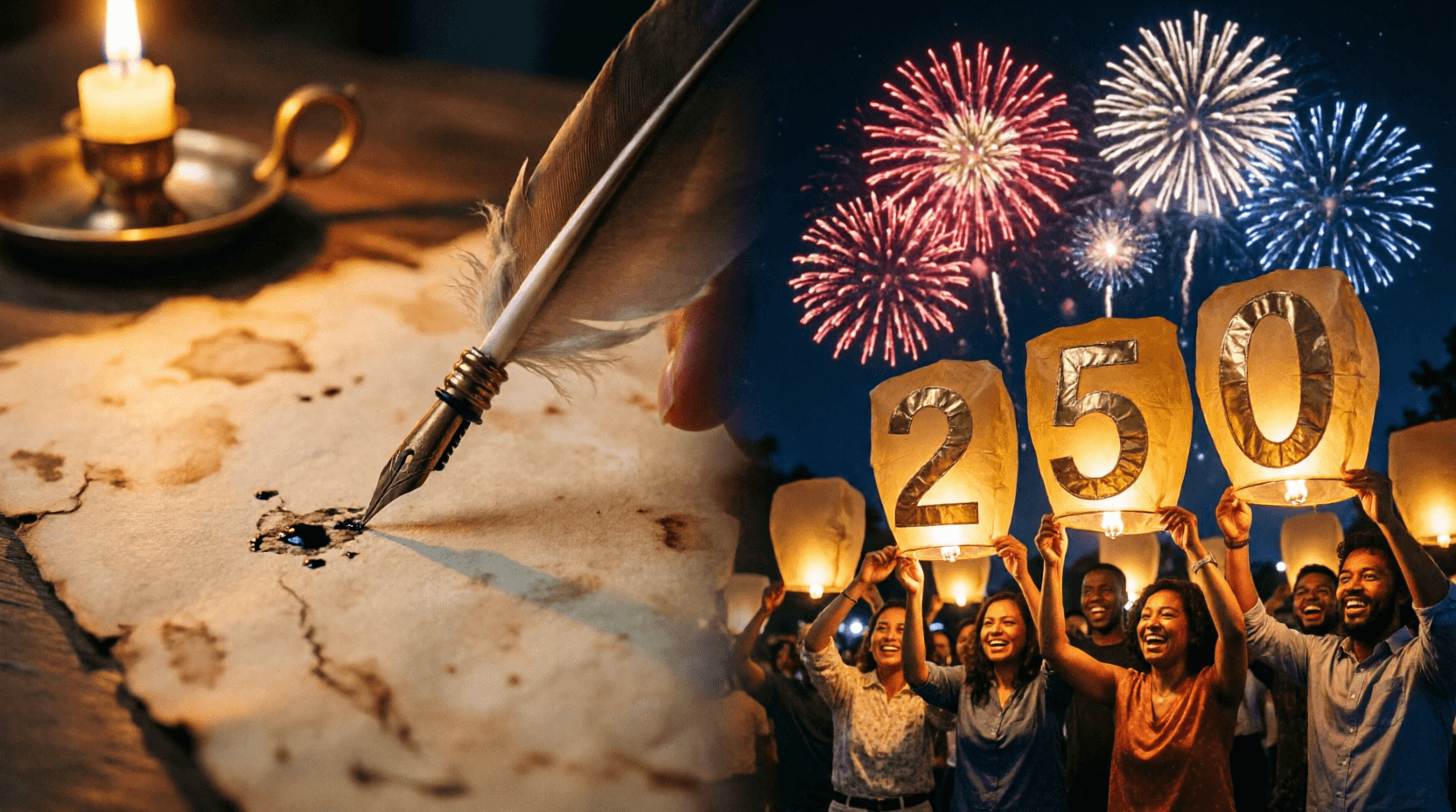
? Ever Wondered What Happens When a Nation Turns 250?
Picture this: It's July 4, 2026. Fireworks light up the sky from Philadelphia to Mumbai, from London to Los Angeles. Millions gather—not just to celebrate a holiday, but to mark a once-in-a-lifetime milestone: America's 250th birthday.
If you've heard the word "semiquincentennial" and thought, "Wait, what does that even mean?" — you're not alone. It's a mouthful! But behind that fancy word is a massive, heartfelt cultural moment that's about so much more than parades and barbecues.
Whether you're a history buff, a traveler planning your next trip, a student working on a project, or just someone who loves a good celebration — this guide is for you. Let's break down everything you need to know about America's 250th, why it matters, and how you can be part of it.
?? So… What Exactly Is the Semiquincentennial?
Let's keep it simple. "Semiquincentennial" is just a fancy way of saying 250th anniversary.
On July 4, 1776, the Continental Congress adopted the Declaration of Independence in Philadelphia. That moment sparked the birth of a new nation. Fast-forward 250 years, and we're looking at July 4, 2026 — the official birthday party for the United States.
But here's the thing: This isn't just another Independence Day. It's a year-long, nationwide (and yes, worldwide) celebration called America250, designed to honor the past, engage the present, and inspire the future.
Think of it like a giant, inclusive reunion — where everyone, regardless of background or location, is invited to reflect, connect, and celebrate what "freedom" and "community" mean today.
?️ How Is America Preparing? A Timeline of the Celebration
You don't have to wait until July 4 to get involved. The festivities have already begun, and they're rolling out across the country in creative, meaningful ways. Here's a snapshot of what's happening:
Early 2026: The Warm-Up Phase
- January–March: Museums launch special exhibitions. The Smithsonian's National Portrait Gallery kicked things off with "American Presidents" and a 250th Festival featuring live music and storytelling.
- April: Philadelphia — the birthplace of American democracy — begins its "52 Weeks of Firsts" campaign, highlighting historic milestones tied to the city.
- May: Historical reenactments heat up. The Battle of Princeton reenactment and the Fifth Virginia Convention commemoration bring history to life in Virginia and New Jersey.
Mid-2026: The Main Event Builds
- June: Sail250 sets sail! Over 60 historic and modern ships from 20+ countries will tour the East Coast and Gulf, stopping in New Orleans, Norfolk, Baltimore, NYC, and Boston.
- June 19–21: The Battle of Monmouth reenactment in New Jersey features hundreds of living historians, period camps, and free public workshops.
- June 27–July 4: Philadelphia's Wawa Welcome America festival takes over with concerts, fireworks, the Liberty Medal Ceremony, and the massive Semiquincentennial Parade.
July 4, 2026: The Big Day
- Nationwide: "America's Block Party" encourages communities to host local gatherings, share stories, and stream a unified celebration via iHeartRadio.
- Washington, D.C.: Fireworks over the National Mall, special ceremonies at the Capitol, and the National Portrait Gallery's flagship events.
- Mount Rushmore: A spectacular fireworks display lights up the presidential faces in South Dakota.
And it doesn't stop there. Events like "America's Potluck" on July 5 invite neighbors to share meals and conversations — turning celebration into connection.
✨ Why This Milestone Feels Different (And Why It Matters)
Sure, we've had bicentennials and centennials before. So why is the semiquincentennial getting so much attention?
1. It's Inclusive by Design
Unlike past celebrations that sometimes centered only on certain narratives, America250 actively highlights diverse voices — Indigenous histories, immigrant stories, civil rights milestones, and everyday heroes.
2. It's Participatory, Not Just Spectator
You're not just watching fireworks. You're invited to:
- Share your family's story via oral history projects
- Volunteer through "America Gives" initiatives
- Host your own Block Party or community potluck
3. It Connects Past to Present
Events aren't just about 1776. They're about asking: What does independence mean in 2026? How do we build a better next 250 years?
4. It's Global
From Indian-American associations hosting cultural fusion events in Mumbai to schools in Tokyo studying the Declaration of Independence, this celebration resonates far beyond U.S. borders.
? Real-Life Ways You Can Join In (No Matter Where You Are)
You don't need a U.S. passport to be part of this. Here's how people around the world are getting involved:
? For Students & Educators
- Use free lesson plans from the National Park Service or Global Philadelphia to explore democracy, primary sources, and civic engagement.
- Join the Young People's Continental Congress (virtual or in-person) to debate ideas just like the Founders did — but with a 2026 perspective.
✈️ For Travelers
- Plan a "Heritage Road Trip": Visit Philadelphia's Independence Hall, Boston's Freedom Trail, or Colonial Williamsburg. Many sites offer special 250th programming.
- Time your trip with Sail250 port stops — imagine watching tall ships glide into New York Harbor on July 4!
? For Families & Communities
- Host a "Story Swap" dinner: Ask elders to share memories of past July 4ths, or record video messages about what freedom means to your family.
- Organize a neighborhood cleanup or tree planting on July 4 — tying celebration to service through the "Giving 4th" initiative.
? For Digital Participants
- Stream America's Soundtrack — a curated playlist of songs that shaped American culture, from spirituals to hip-hop.
- Follow #America250 on social media to share photos, art, or poems inspired by the milestone.
? Why This Celebration Stands Out From Other Historical Anniversaries
Let's be honest: Anniversaries can sometimes feel repetitive. So what makes America250 worth your attention?
✅ It's not stuck in the past. While honoring history, it focuses on today's challenges and opportunities — climate action, digital citizenship, global cooperation.
✅ It's locally led. Every state has its own commission tailoring events to local culture. Wyoming's prairie festivals look different from Hawaii's ocean-focused celebrations — and that's the point.
✅ It's accessible. Most events are free or low-cost. National Parks offer special passes. Virtual options ensure no one's left out.
✅ It sparks conversation. Rather than just cheering, it invites reflection: What ideals do we want to carry forward? Whose stories have been overlooked?
In a world that often feels divided, this celebration tries to do something radical: bring people together through shared curiosity, not just shared slogans.
? Pro Tips to Make the Most of America250
Want to go beyond just watching the fireworks? Try these:
? Start small, think big: You don't need to travel to Philadelphia. Host a mini "history hour" at home with documentaries, recipes from 1776, or a family timeline project.
? Use tech wisely: Download the America250 app or bookmark the official calendar to find events near you — or join virtual ones from anywhere.
? Document your experience: Take photos, write a short blog, or record a voice memo. These personal artifacts become part of the larger story.
? Connect across borders: If you're outside the U.S., partner with a local school or cultural group to host a "Global Perspectives on Freedom" discussion.
? Give back: Tie your celebration to service. Plant a tree, donate books, or mentor a young person. That's the spirit of "Giving 4th."
❓ Frequently Asked Questions
Q: When exactly is America's 250th birthday?
A: The official date is July 4, 2026 — marking 250 years since the adoption of the Declaration of Independence. But celebrations run throughout the year.
Q: Do I have to be in the U.S. to participate?
A: Not at all! Many events are virtual, and communities worldwide are hosting their own tributes. Follow #America250 to join the global conversation.
Q: Are events free?
A: Most are! Parades, concerts, museum exhibitions, and community gatherings are typically free. Some special experiences (like certain tours or concerts) may have tickets — check local listings.
Q: How can kids get involved?
A: Look for family-friendly events like Kidchella festivals, historical scavenger hunts, or craft workshops. Many libraries and schools offer 250th-themed activities.
Q: What if I'm not American — why should I care?
A: The ideas born in 1776 — liberty, self-governance, human rights — sparked global movements. This milestone invites everyone to reflect on how those ideals evolve today, everywhere.
? Final Thoughts: More Than a Birthday, It's an Invitation
America's 250th isn't just about looking back. It's a chance to ask: What kind of future do we want to build together?
Whether you light a candle, share a story, plant a seed, or simply pause to reflect on July 4 — you're part of this moment. The semiquincentennial reminds us that history isn't just written in books. It's lived, shared, and reshaped by people like you and me.
So as we count down to 2026, why not start now? Pick one small way to engage. Talk to a grandparent about their memories. Visit a local historic site. Or just have a conversation about what "freedom" means in your life today.
The next 250 years start with the choices we make right now. And honestly? That's the most exciting part of the celebration.
Got a favorite way you're planning to mark America's 250th? Drop a comment below — I'd love to hear your ideas! ?
💬 Comments (0)
No comments yet. Be the first to share your thoughts!
Leave a Comment